
A game reserve is a large area of protected land where wildlife and its natural habitat are conserved. Unlike a national park, which is always state-owned, a game reserve can be public, private, or community-owned. Its primary goal is to protect animals and their ecosystems, often funded by ecotourism activities like guided safaris, bush walks, and night drives.
This model allows for a blend of conservation and visitor experiences, with revenue from tourism directly supporting anti-poaching efforts, habitat management, and community development. Essentially, it is a managed sanctuary designed to let wildlife thrive while offering controlled, low-impact access for visitors.
Understanding the Core Purpose of a Game Reserve
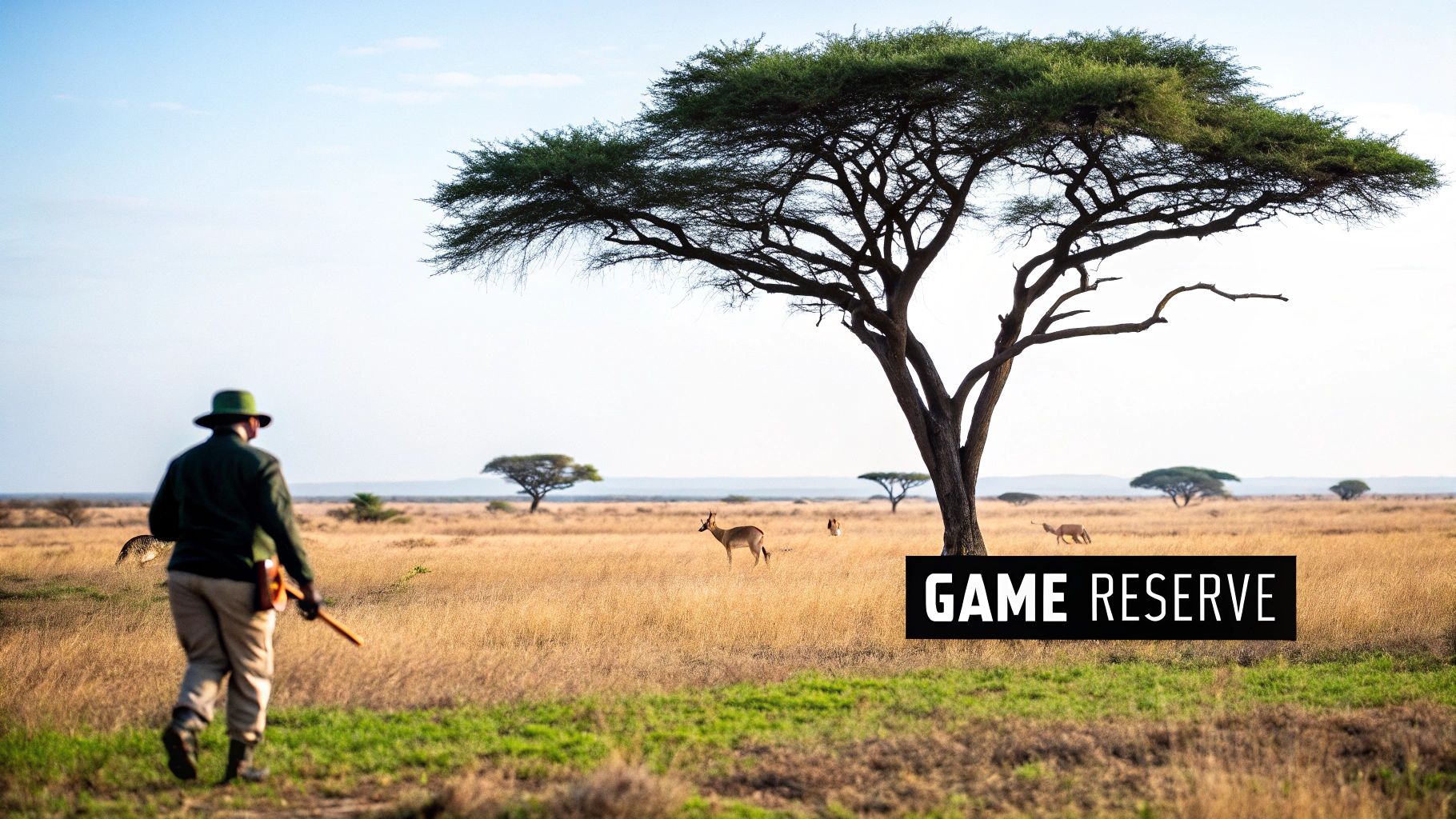
The core purpose of a game reserve is to protect biodiversity and support local communities through responsible tourism. The name itself hints at its history, when land was first set aside to preserve ‘game’ animals, often for hunting. However, modern game reserves are overwhelmingly focused on conservation.
They serve as safe havens where animals can roam, breed, and thrive without external pressures. This protection extends beyond iconic animals to cover entire ecosystems, from the smallest insects to the vast savannahs they inhabit.
A Focus on Conservation and Experience
Game reserves are carefully managed landscapes, balancing human intervention with natural processes. This hands-on management often allows for unique visitor experiences that may not be available in more strictly regulated national parks. This approach creates a sustainable model where tourism revenue directly funds the conservation work that makes the entire experience possible.
In Uganda, for example, game reserves are designated areas for wildlife conservation and ecotourism. The Uganda Wildlife Authority manages 12 wildlife reserves covering approximately 16.06% of the country's land. This protected land shelters over 345 recorded mammal species—nearly 39% of all mammals found in Africa. You can discover more fascinating facts in our extensive information guides.
Core Features of a Game Reserve
| Feature | Description |
|---|---|
| Primary Goal | Conservation of wildlife and their natural habitats. |
| Management | Can be publicly or privately owned and operated. |
| Tourism Model | Focuses on sustainable, low-impact tourism to fund conservation. |
| Activities | Often allows a broader range of activities, including walking safaris and night drives. |
| Human Role | Involves active management to balance ecological needs and visitor experiences. |
This table shows how these elements come together to create a unique conservation model.
Key Functions of a Modern Game Reserve
The role of today's game reserve is a blend of science, tourism, and community partnership. Their main responsibilities include:
- Habitat Protection: Shielding entire ecosystems—grasslands, forests, rivers, and wetlands—that are vital for animal survival.
- Species Conservation: Actively protecting vulnerable or endangered species from poaching and habitat loss through anti-poaching patrols and constant monitoring.
- Scientific Research: Acting as a living laboratory where researchers can study animal behaviour, population trends, and overall ecosystem health.
- Sustainable Tourism: Offering controlled, low-impact safari activities that generate revenue for conservation and create jobs for local people.
A game reserve is so much more than just a piece of land with animals on it. It’s a dynamic, managed ecosystem where the delicate balance between wildlife and human activity is constantly being navigated for the benefit of both.
This sets the stage for their history, management, and the incredible wildlife encounters they offer, especially within Uganda's unique conservation landscape.
The Evolution of East Africa's Game Reserves
The history of East Africa's game reserves has changed dramatically over time. Originally, many of these lands were established during the colonial era as exclusive hunting grounds. The primary goal was to preserve ‘game’ animals—like lions, elephants, and buffalo—for sport hunting by colonial officials and wealthy visitors. This early model was not about holistic conservation and often displaced local communities from their ancestral lands.
From Hunting Grounds to Conservation Strongholds
The purpose of these areas began to shift as independence movements swept across the continent. New governments in Uganda, Kenya, and Tanzania re-evaluated these vast wildlands. The focus gradually moved from sport hunting toward protecting the region's incredible biodiversity and natural heritage for all citizens.
This shift was supported by new legislation. Colonial-era game ordinances were replaced with modern wildlife acts that redefined reserves as sanctuaries for all wildlife, not just species prized by hunters.
The post-independence era marked a critical turning point. Conservation became an expression of national pride and a recognition of the intrinsic value of wildlife, setting the stage for the modern ecotourism model we see today.
This new thinking was profound. The value of an elephant or lion was no longer measured by its trophy potential but by its vital role in the ecosystem and its ability to attract a new kind of visitor—one armed with a camera instead of a rifle.
Redefining Conservation in Modern East Africa
Today, the concept of a game reserve has evolved further. The modern approach is more holistic, recognizing that effective conservation requires more than just drawing lines on a map. It involves a complex blend of scientific research, hands-on habitat management, and community partnership.
This new model acknowledges that local communities bordering reserves are crucial allies. Instead of being excluded, they are increasingly involved in management decisions and share in tourism revenue. This creates a powerful incentive to protect wildlife, turning potential conflict into a shared, sustainable resource.
This modern philosophy is built on several key pillars:
- Biodiversity Protection: The focus is now on protecting entire ecosystems—from the smallest insects to the largest mammals—to maintain a healthy ecological balance.
- Scientific Research: Reserves have become living laboratories, giving us invaluable insights into animal behaviour and helping to shape effective, evidence-based conservation strategies.
- Community Partnership: Local people are recognised as key stakeholders who must have a voice in management and see tangible benefits from wildlife tourism.
- Sustainable Ecotourism: The goal is to promote low-impact travel that not only provides unforgettable experiences but also directly funds the conservation work needed to protect these areas.
This integrated strategy is now the gold standard across many of East Africa's nations, where game reserves are rightly seen as critical assets for both environmental health and economic prosperity.
Game Reserve vs. National Park: What's the Real Difference?
It’s a common mix-up. People often use ‘game reserve’ and ‘national park’ interchangeably, but the differences are significant for safari-goers. The main distinctions relate to land ownership, primary purpose, and permitted activities. Understanding these differences is key to choosing the right safari experience.
A national park is almost always owned and managed by the state as a national treasure, set aside to protect landscapes and wildlife for the entire country. A game reserve, however, can be state-run, privately owned, or managed by a local community. This ownership difference shapes everything else.
Who's in Charge and What's the Goal?
The most important distinction is governance. National parks are managed by a government body, like the Uganda Wildlife Authority. Their mandate is pure conservation, with strict rules to keep the ecosystem as untouched as possible for future generations.
This state-led approach means you get consistency. The rules in one national park are often the same as in another, all designed to minimise human impact and preserve nature in its rawest form.
Private game reserves are different. They are operated by individuals, families, or companies. While equally dedicated to wildlife protection, their approach often blends conservation with more exclusive and flexible tourism. This freedom allows them to create unique safari experiences that are not possible in a national park.
How This Affects Your Safari
This difference in management style directly impacts what you can see and do. National parks prioritize conservation, so visitor activities are carefully controlled to avoid environmental stress. The focus is on observation with minimal interference.
Private game reserves often balance conservation with high-end ecotourism. Because they host fewer guests than public parks, they can manage the land differently and offer more intimate wildlife encounters.
Here’s a quick look at activities you might find in one but not the other:
- Off-Road Driving: In most national parks, this is strictly forbidden to protect fragile vegetation. In a private reserve, a guide can often drive off-track for a closer look at a special sighting, like a leopard in a tree.
- Night Drives: National parks usually require all vehicles to be back at camp by dark. Private reserves are known for guided night drives, revealing a world of nocturnal animals like genets, porcupines, and hunting predators.
- Walking Safaris: While some parks have designated walking trails, private reserves often allow guided walks directly from the lodge, immersing you completely in the sights and sounds of the bush.
A Ugandan Example: Bwindi vs. Pian Upe
To see this in the real world, let's compare two of Uganda's protected areas.
Bwindi Impenetrable National Park is a UNESCO World Heritage Site famous for its mountain gorillas. As a national park, the rules are extremely strict to protect the fragile forest ecosystem. Off-road driving is prohibited, and visitor experiences are channeled into specific, expertly guided treks.
Pian Upe Wildlife Reserve is one of Uganda’s largest conservation areas. Although also state-managed, its "reserve" status has historically allowed for more flexible use, such as sustainable resources for local communities. Today, its focus is conservation and photographic tourism, but that historical flexibility is what sets the two concepts apart.
Comparing Game Reserves and National Parks
Here’s a side-by-side look to help you clearly see the defining features of each.
| Characteristic | Game Reserve | National Park |
|---|---|---|
| Ownership | Can be privately, state, or community-owned. | Almost always owned and managed by the state. |
| Primary Goal | Conservation, often combined with exclusive ecotourism. | Strict conservation and preservation of national heritage. |
| Regulations | Management is more flexible; internal rules can be set. | Rules are standardised, strict, and set at a national level. |
| Key Activities | Often allows night drives, walking safaris, and off-road driving. | Activities are typically restricted to main roads and set hours. |
| Human Settlement | Generally not allowed, but some historical community zones may exist. | Strictly prohibited to ensure minimal human impact. |
| Resource Use | Some historical sustainable use was permitted; now very rare. | Prohibited; the entire focus is on preservation. |
Ultimately, neither is better—they just offer different philosophies and experiences. Understanding these differences ensures you know exactly what to expect from your adventure.
Why Game Reserves Are So Critical for Conservation
Game reserves are more than just scenic safari destinations; they are frontline battlegrounds in the fight to preserve global biodiversity. These protected areas act as living laboratories, safeguarding not just individual animals but the entire web of life that connects them.
From the delicate balance between predator and prey to complex plant communities, game reserves protect whole ecological processes. They also serve as vital wildlife corridors, allowing animals to roam between different habitats—a crucial requirement for migration, breeding, and maintaining healthy genetic diversity.
Biodiversity Hotspots and Genetic Sanctuaries
Many game reserves are established to protect biodiversity hotspots—regions with an exceptionally high concentration of different species. Think of them as nature's most valuable libraries, each holding an irreplaceable collection of genetic information.
This genetic diversity fuels evolution and allows species to adapt to a changing world, whether from climate shifts or new diseases. By protecting these areas, we are not just saving animals; we are maintaining the resilience of life on Earth.
This infographic breaks down the different roles that protected areas play in this global effort.
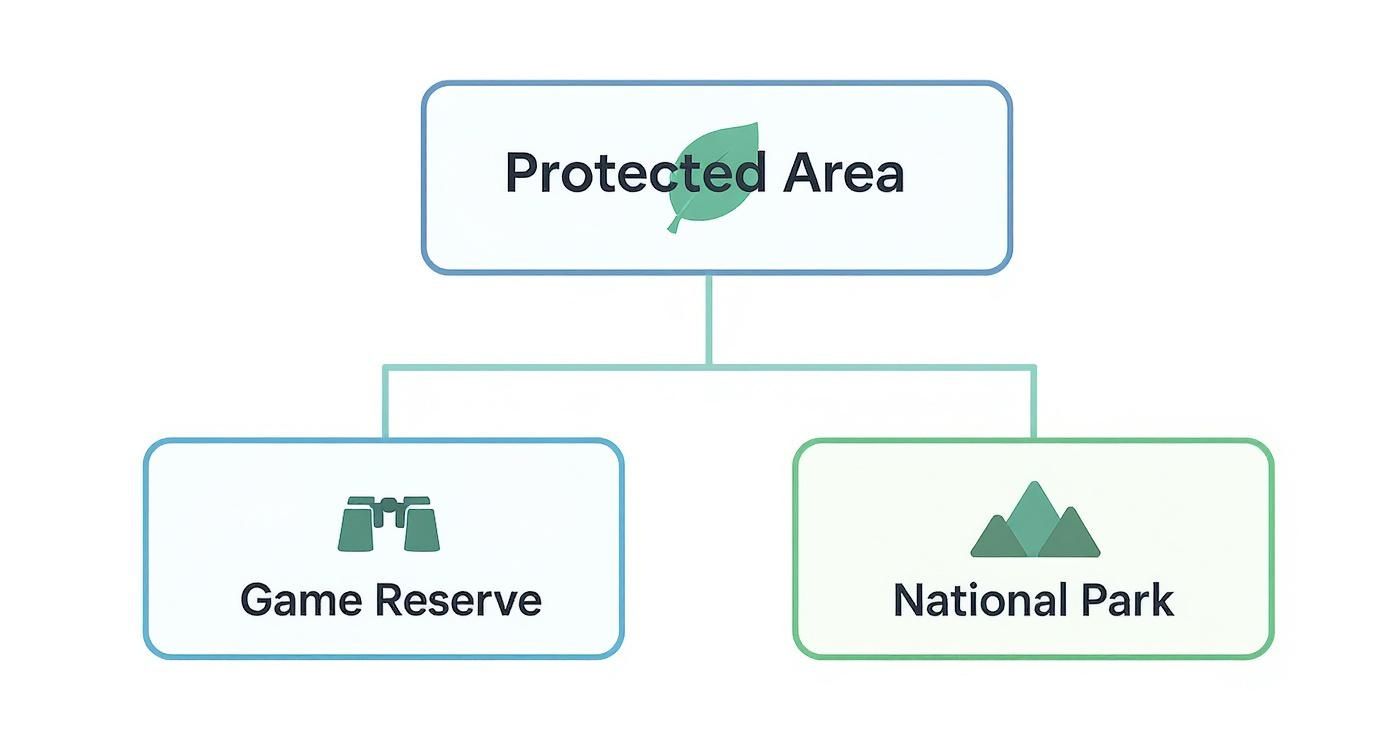
As you can see, both game reserves and national parks are cornerstones of conservation, but they each contribute in their own unique way to the shared goal of protecting our natural heritage.
The Major Conservation Challenges
Despite their importance, game reserves face immense pressure. The challenges are complex and threaten the very wildlife they were created to protect. The biggest threats include:
- Poaching: The illegal hunting of animals for tusks, horns, skins, or bushmeat remains a constant threat, pushing species like elephants, rhinos, and big cats to the brink.
- Human-Wildlife Conflict: As human settlements expand, people and animals compete for space and resources. This leads to conflict when predators attack livestock or elephants raid crops.
- Habitat Encroachment: The expansion of agriculture, infrastructure, and settlements gradually shrinks and fragments habitats, isolating animal populations.
These aren't separate issues. They are deeply interconnected, creating a tangled web of threats. For instance, when habitat is lost, animals are often forced into human-occupied areas. This fuels human-wildlife conflict, which in turn can make those same animals easier targets for poachers.
Tackling these problems requires a multi-pronged approach that includes anti-poaching patrols, community education, and effective land-use planning.
A Case Study in Urgency: Ugandan Lions
The health of an ecosystem can often be measured by its apex predators. If lions are struggling, the entire food web is likely in trouble. Unfortunately, recent data from Uganda highlights a grim situation.
A survey conducted between 2022 and 2023 across six key protected areas revealed a shocking 40% decline in the lion population within Queen Elizabeth National Park. This renowned park is now estimated to have only 39 lions, while Kidepo Valley National Park has just 12.
As a critically endangered species on Uganda’s national red list, the lion's future depends entirely on the protection offered by these reserves. You can read more in the African lion survey on africanxmag.com.
This is precisely why game reserves are so critical. They are not passive parks but active engines of conservation, providing the space, protection, and management needed to give species like the African lion a fighting chance at survival.
A Tour of Uganda's Premier Game Reserves
While Uganda's national parks are famous, its network of game reserves offers some of the most raw and authentic wildlife experiences in Africa, often without the crowds. These reserves are vital conservation strongholds, each with a unique character and story.
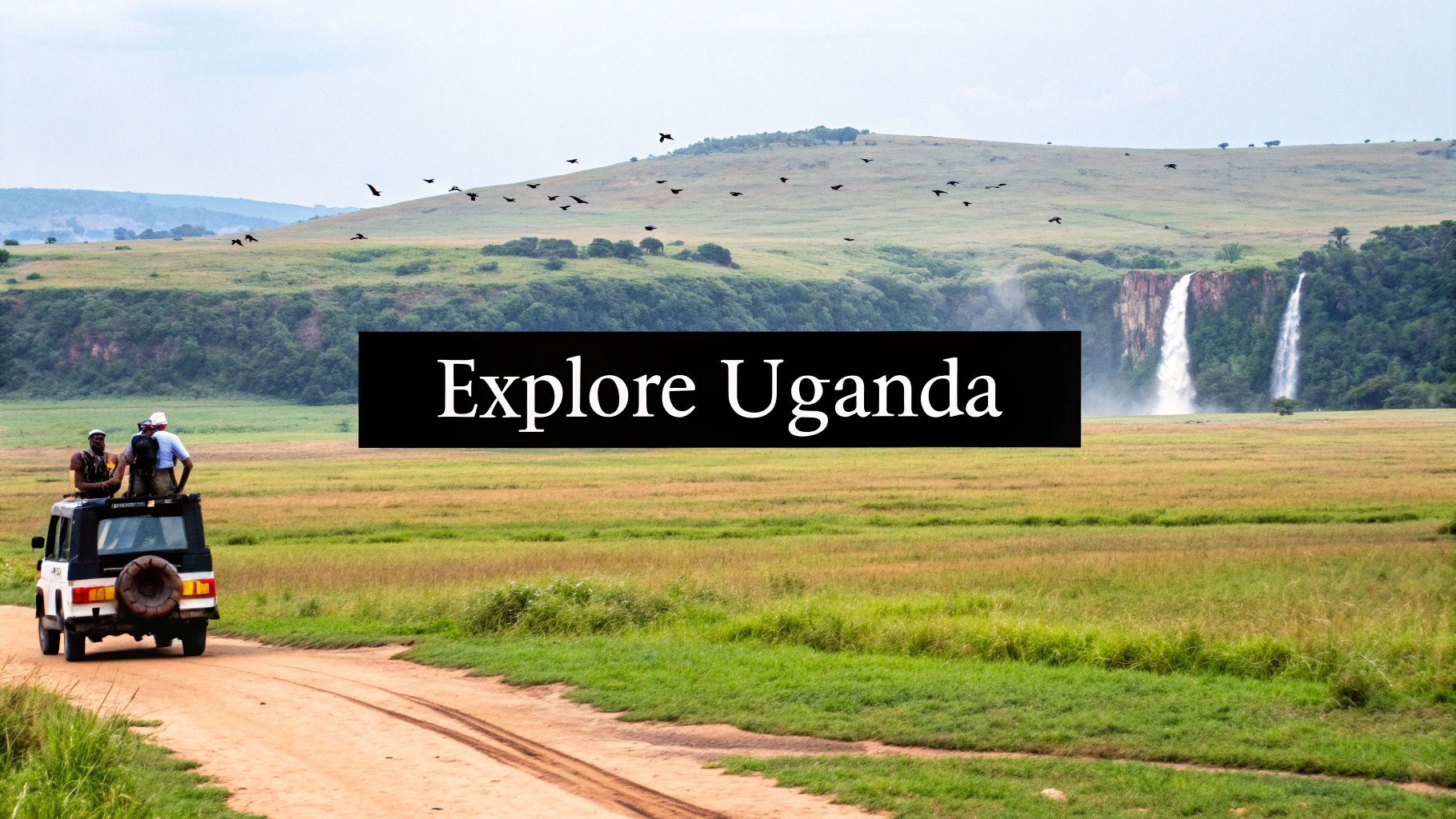
Exploring these less-travelled gems is a fantastic way to get off the beaten path and experience the wild heart of the nation. If you’re feeling inspired, our guide to all the amazing destinations in Uganda is the perfect place to start planning.
Pian Upe Game Reserve
Located in the remote Karamoja subregion of northeastern Uganda, Pian Upe is the country's largest game reserve. Its vast, semi-arid plains, scattered with acacia trees and rocky outcrops, feel a world away from the lush greenery found elsewhere.
Pian Upe is a sanctuary for species adapted to drier climates. It is one of the few places in Uganda to see the magnificent roan antelope and the only place with a sustainable cheetah population.
Other highlights include:
- Ostriches: This is your only chance to see Uganda's last remaining wild ostriches.
- Eland and Roan Antelope: Spotting these large, graceful antelopes is a real treat for any visitor.
- Leopards and Spotted Hyenas: They're elusive, but these powerful predators roam the plains.
The best way to explore is on a game drive across the expansive landscape or on a guided nature walk to appreciate the smaller details of this unique ecosystem.
Toro-Semliki Game Reserve
Nestled in the Albertine Rift Valley near the Rwenzori Mountains, Toro-Semliki offers a completely different atmosphere. As one of Uganda’s oldest reserves, its landscape is a beautiful mosaic of savannah, riverine forest, and acacia-combretum woodland. The Wasa River acts as a magnet for wildlife, especially during the dry season.
Toro-Semliki is a paradise for birdwatchers, with over 440 recorded bird species, including the shoebill stork. It is also home to forest elephants and the iconic Ugandan kob. To experience the reserve fully, you can take a boat trip on Lake Albert, track chimpanzees, or enjoy a scenic game drive with breathtaking views.
This reserve beautifully illustrates the importance of habitat diversity. The combination of forest and savannah allows it to support a unique blend of species that you wouldn't find in a single-habitat environment.
A Story of Resilience: Murchison Falls
While Murchison Falls is a national park, its journey offers a powerful lesson in conservation. As Uganda's largest and oldest national park, it stands as a testament to nature's ability to recover.
After years of civil unrest and intense poaching, its wildlife populations were devastated, with elephant numbers crashing from 16,000 to under 500. However, thanks to dedicated conservation efforts since 2018, poaching rates in core areas have been slashed to less than 5% of species killed annually. This comeback is remarkable. You can read more about the recovery of Murchison Falls National Park from Global Conservation.
This success story is a beacon of hope for all protected areas, proving that with commitment and the right strategy, we can reverse even devastating declines and secure a future for Africa's wildlife.
How to Plan a Responsible Ecotourism Visit
A trip to a game reserve is a privileged experience that comes with a responsibility to travel thoughtfully. Making choices that protect wildlife, support local communities, and preserve the environment ensures your visit has a positive impact. When you travel with intention, you become a partner in the conservation efforts that keep these wild places alive.
Choose Your Partners Wisely
The most important step is selecting the right tour operators and lodges. Not all companies operate ethically, so a little research goes a long way. Look for businesses that are transparent about their conservation work and community partnerships. These are the companies that hire local guides, source produce from nearby farms, and reinvest profits into local projects.
A key takeaway: When a lodge or tour company is transparent about its commitment to sustainability, it's a strong sign that your visit will contribute positively. Your spending becomes a direct investment in the local economy and conservation efforts.
Checking for certifications from reputable ecotourism organizations is another great way to identify responsible partners. When you're ready to start looking, you can find a range of properly vetted safaris and tours that prioritize responsible travel.
Understanding the Rules of the Wild
Once you are in the reserve, following safari etiquette is critical for your safety and the well-being of the animals. These rules are based on years of experience and an understanding of animal behavior.
Following these guidelines ensures your presence doesn't stress wildlife or alter their natural behavior.
- Maintain a Safe Distance: Getting too close can make an animal feel threatened. Respect their space and use binoculars for a closer look.
- Do Not Feed the Animals: Feeding wildlife is dangerous. It disrupts their natural diet, can make them sick, and habituates them to humans, which often leads to aggression.
- Minimise Your Noise: Loud talking and engine noises can be disruptive. Keep your voice low to enjoy the natural soundscape and avoid disturbing the animals.
- Leave No Trace: Pack out everything you bring in. This includes all litter, even organic waste like fruit peels, which can harm animals.
How Your Visit Makes a Difference
Your trip is a direct lifeline for conservation. The fees you pay to enter a game reserve are much more than just an entry ticket—they are the lifeblood that funds the entire operation. This money is channeled into essential activities that protect animals and maintain the reserve.
For instance, your park fees help pay for:
- Ranger salaries for anti-poaching patrols.
- Maintenance of roads and infrastructure.
- Scientific research and wildlife monitoring.
- Community education projects that foster positive relationships between local people and wildlife.
By simply choosing to visit, you become an active participant in protecting these incredible ecosystems and leave a positive legacy for wildlife and local communities.
Your Questions About Game Reserves Answered
Let's clear up some of the most common questions people have about game reserves, providing a complete picture of these vital conservation areas.
Can People Actually Live Inside a Game Reserve?
Generally, no. Permanent human settlements are typically not allowed inside a game reserve to minimize impact on wildlife and habitats. This helps maintain the natural balance of the ecosystem. However, some exceptions exist, particularly in community-run conservancies where communities have historically lived on the borders or within specific zones. This is a key difference compared to national parks, which have much stricter rules against any human settlement.
Is Hunting Allowed in a Game Reserve?
This depends on the specific reserve and its purpose. The term 'game reserve' originates from a time when these areas were designated for hunting. While many modern reserves are strictly for photographic safaris and conservation, some private reserves and designated hunting blocks still permit legal, regulated sport hunting. The revenue generated from these activities often funds anti-poaching and conservation efforts across a wider area. It is essential to check the rules for any reserve you plan to visit.
What Is the Best Time to Visit a Game Reserve in Uganda?
The best time for wildlife viewing in Uganda is during the two dry seasons: December to February and June to August. During these months, vegetation is thinner, and animals gather around water sources, making them easier to spot. However, the wet seasons (March to May and September to November) offer lush, green landscapes, excellent birdwatching with migratory species, and fewer tourists.
How Do Game Reserves Stay Funded?
Game reserves rely on a mix of funding sources for their long-term survival. This blended financial model is key to their success.
Typical funding streams include:
- Government Allocations: State-managed reserves often receive foundational support from national budgets.
- Tourism Revenue: Entry fees, accommodation taxes, and activity permits are a major source of income that is reinvested into the reserve.
- Private Donations: Contributions from individuals and philanthropists provide significant support.
- NGO Grants: Global conservation organizations frequently fund specific projects, such as anti-poaching teams or wildlife research.
Private reserves also generate revenue from luxury safari lodges and, in some cases, regulated hunting operations.
At HelloEastAfrica, we’re passionate about helping you experience the magic of this incredible region. Our platform connects you with trusted local operators who believe in responsible, unforgettable travel just as much as we do. Ready to plan your perfect East African adventure? Start today at https://helloeastafrica.com.
What will your Uganda trip cost?
Use the Uganda Trip Cost Calculator to see a realistic starting range before you ask for a human-checked quote.


Comment (0)