

Yes, Uganda is a country located in East Africa. It is a landlocked nation situated right on the equator, sharing borders with five other African countries: Kenya to the east, South Sudan to the north, the Democratic Republic of the Congo to the west, and both Rwanda and Tanzania to the south. This central position makes it a key part of the African Great Lakes region and a vital crossroads for the continent.
Where Exactly is Uganda?
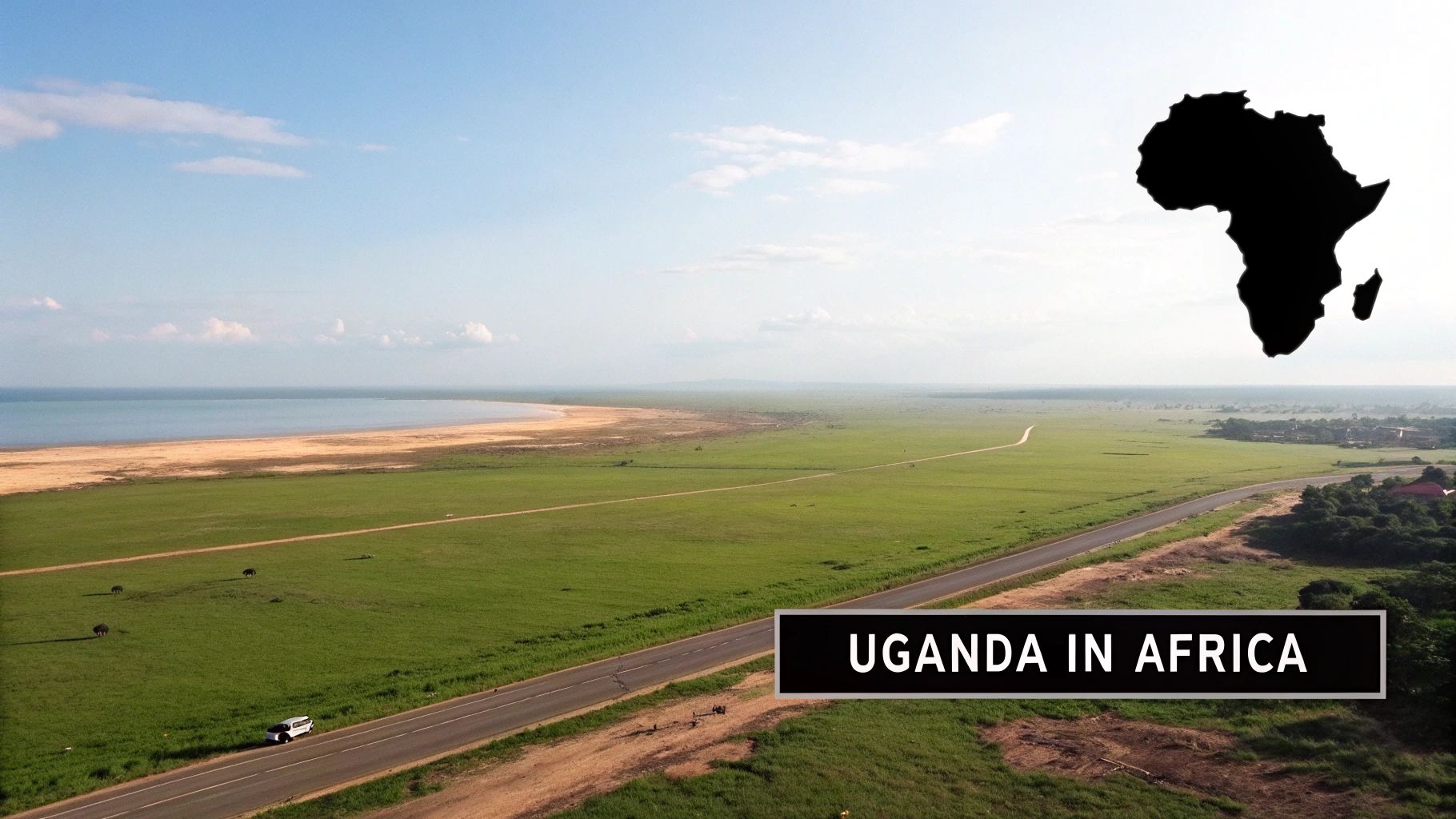
While the simple answer is "yes," Uganda's precise location tells a much richer story. The country straddles the equator, which gives it a beautiful tropical climate that defies its high altitude. Unlike nations with an oceanfront, Uganda has no direct access to the sea, making it entirely landlocked.
This central position means Uganda is a real crossroads, sharing its borders with five other African countries. This unique spot plants Uganda right at the core of the African Great Lakes region, a fact you can explore further with resources from the World Bank.
The Pearl of Africa at a Glance
For a clearer picture of Uganda's place on the map, a quick summary of its core details is helpful. The table below offers a snapshot of the country's key geographical facts.
| Attribute | Details |
|---|---|
| Capital City | Kampala, the nation's largest urban centre. |
| Official Languages | English and Swahili are official, but Luganda is also widely spoken. |
| Population | Home to over 45 million people from more than 50 distinct ethnic groups. |
| Continent | Africa |
| Region | East Africa, African Great Lakes region |
| Unique Feature | The country is bisected by the equator. |
These facts provide a solid foundation for understanding the country's identity and its role on the continent.
Don't let the term "landlocked" fool you into thinking Uganda is isolated. On the contrary, its central location has made it a crucial partner in regional trade and diplomacy, acting as a vital link between East and Central Africa for generations.
With a handle on its geography, you can start to appreciate what makes this nation, often called the "Pearl of Africa," so special. It's the first step in exploring its incredible history, vibrant culture, and undeniable significance within the African continent.
Mapping Uganda's Place Among Its Neighbours
To get a real feel for Uganda's position in Africa, you have to look at the countries surrounding it. As a landlocked nation, its identity, economy, and culture are completely intertwined with the five nations it shares a border with. These aren't just lines on a map; they're bustling zones of trade, migration, and shared history that put Uganda right at the heart of East African affairs.
The map perfectly shows Uganda’s unique position, nestled right in between some of the continent's most dynamic countries. It acts as a natural bridge between the vast savannahs of the east and the dense rainforests of Central Africa.
A Closer Look at the Bordering Nations
Each of Uganda’s neighbours adds a different flavour to its regional character. Understanding these relationships is key to seeing how Uganda is not just in Africa, but deeply and uniquely connected to it.
- Kenya to the East: Kenya provides Uganda's lifeline to the sea. A massive chunk of Uganda’s imports and exports flows through the Kenyan port of Mombasa, making this its most critical economic gateway.
- South Sudan to the North: The connection here runs deep, with shared ethnic and cultural ties. For decades, this border has also been a hotspot for regional security issues and refugee movements.
- Democratic Republic of Congo (DRC) to the West: This is an enormous border marked by staggering natural beauty—from the Rwenzori Mountains to shared national parks—but it’s also a region with its own complex security challenges.
- Rwanda and Tanzania to the South: These southern borders connect Uganda to the rest of the East African Community. The trade routes across Lake Victoria to Tanzania are historically vital, and the relationship with Rwanda is a close, complex mix of culture and politics.
These countries aren't just neighbours; they're essential partners. You can dive into the unique character of each of these countries in this detailed guide to East Africa’s nations.
Uganda’s location makes it a crucial member of the East African Community (EAC), a regional intergovernmental organisation. Its central position is a huge advantage, making it easier to cooperate on everything from trade deals and infrastructure projects to joint conservation efforts. This reinforces its role as a key player in shaping the continent's future.
A Journey Through Uganda's African History
To get a real feel for Uganda's place in Africa, you have to look past modern maps and dive into its incredible past. Long before colonial lines were ever drawn, this land was a tapestry of powerful indigenous kingdoms that shaped the region’s culture and politics for centuries.
Two of the most dominant forces were the kingdoms of Buganda and Bunyoro-Kitara. These were highly organised societies with intricate political systems, established royal lines, and vibrant cultural traditions that you can still see and feel today. This history is the bedrock of Ugandan identity—a story created by Africans, for Africans, on African soil, showing the nation's roots run deep into the continent's own history.
From Protectorate to Independence
The arrival of British influence in the late 19th century kicked off a new, and complicated, chapter. The area was declared a British Protectorate in 1894, an act that redrew the map and rearranged traditional power dynamics. It’s an experience Uganda shares with many other nations on the continent, tying its story to the wider African struggle for self-rule.
That struggle reached a major milestone on October 9, 1962, when Uganda finally achieved its independence. It stood tall as a sovereign nation, ready to forge its own path. Since that day, the country has grown tremendously, with its population rocketing from around 6.5 million to over 45 million people from more than 50 distinct ethnic groups. You can dig into more basic facts about Uganda to see just how diverse it is.
This timeline gives you a great visual snapshot of Uganda's journey from ancient kingdoms to the modern nation we know today.
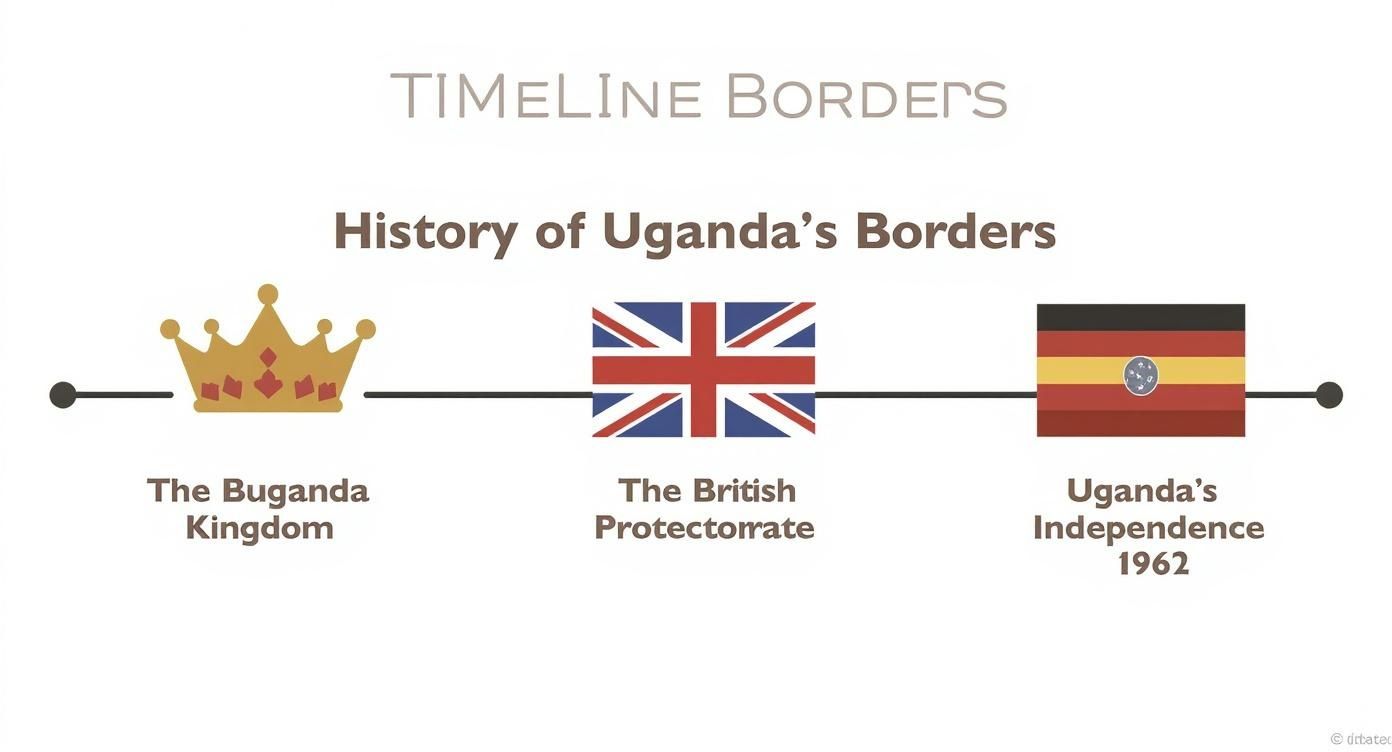
As you can see, the modern state of Uganda wasn't just created out of thin air. It was forged from ancient African roots, shaped by colonial pressures, and finally brought to life by a powerful drive for independence.
This path—from mighty kingdoms, through a colonial chapter, to hard-won independence—is a story that echoes across Africa. It’s a narrative of resilience and identity that proves Uganda isn’t just geographically in Africa; it is historically and culturally African to its very core.
Discovering the Pearl of Africa
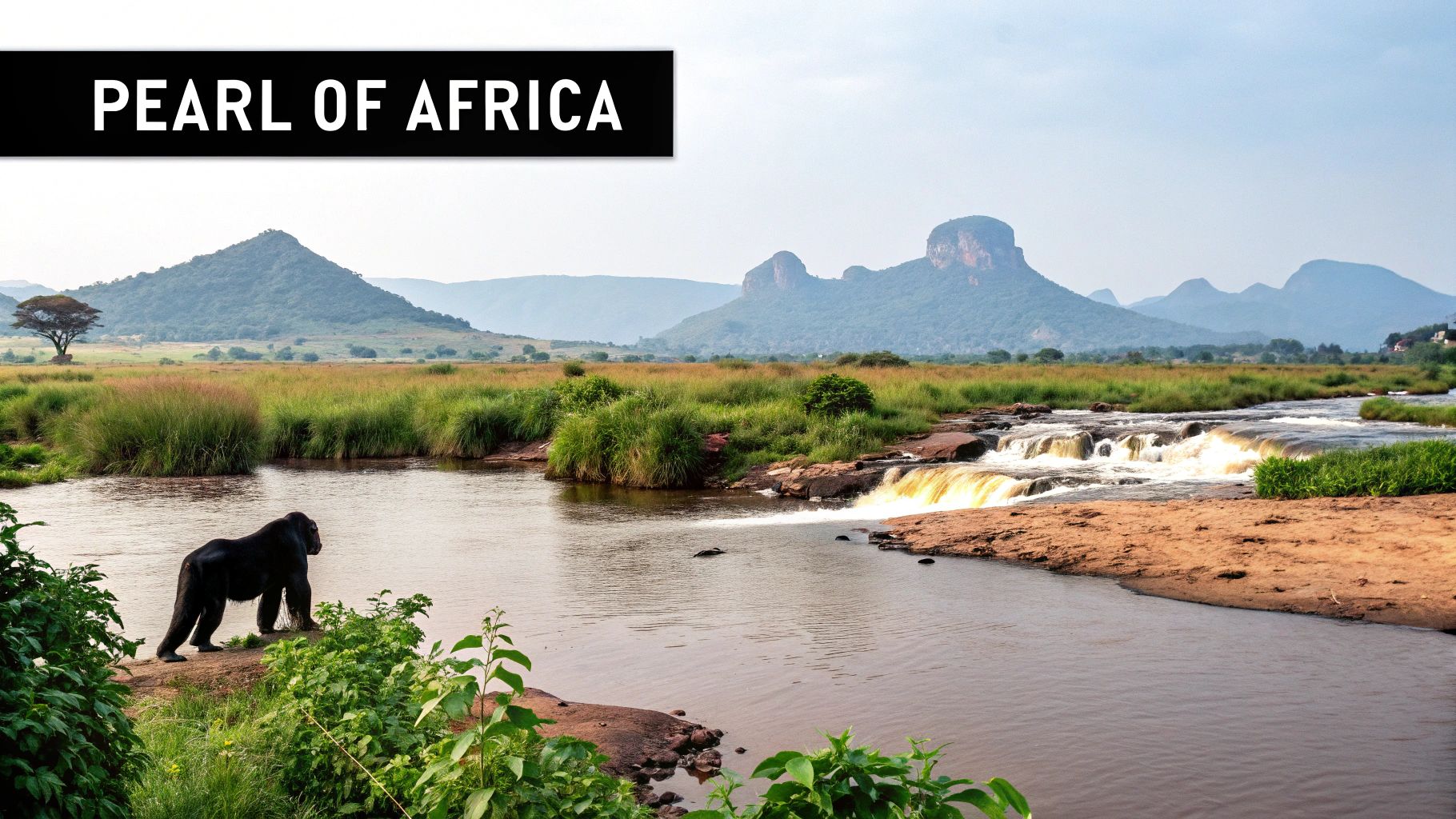
It was Winston Churchill who famously called Uganda the "Pearl of Africa," a title that perfectly captures a country packed with some of the most breathtaking and diverse scenery on the entire continent. From the raw power of Murchison Falls, where the mighty Nile River explodes through a narrow 7-metre gorge, to the ancient, mist-shrouded canopy of Bwindi Impenetrable Forest, Uganda is a living showcase of Africa's wild heart.
Iconic African Wildlife and Landscapes
Uganda’s national parks are world-famous sanctuaries for Africa’s most incredible animals. Venturing into these wild spaces gives you a front-row seat to the country's natural wealth.
- Mountain Gorillas: Deep within the UNESCO-listed Bwindi Impenetrable Forest, you’ll find nearly half of the world's last remaining mountain gorillas.
- Tree-Climbing Lions: Head to the Ishasha sector of Queen Elizabeth National Park for a truly unusual sight—lions casually lounging in the branches of giant fig trees.
- Snow-Capped Peaks: The mystical Rwenzori Mountains, also known as the "Mountains of the Moon," offer a surreal trekking experience with their equatorial glaciers.
- Vast Savannas: For that classic safari feeling, Kidepo Valley National Park delivers with its sweeping grasslands roamed by massive herds of buffalo, elephants, and giraffes.
The sheer variety is what sets Uganda apart. One day you can be in a lush rainforest, the next on a shimmering lake, and then find yourself in an arid savanna or at the foot of a towering, glaciated mountain. This is why it’s the Pearl of Africa.
The best way to truly grasp Uganda's magic is to see it for yourself. To get started, have a look at our guide on the best places to visit in Uganda and begin planning your adventure.
Uganda's Place in Modern Africa
Uganda is far more than just a stunning travel destination; it's a nation deeply woven into the fabric of modern Africa. It’s an active player on the continental stage, helping to steer the region's economic and political direction. This influence reaches well beyond its own borders, cementing its status as a key nation in Africa's story.
As a committed member of both the East African Community (EAC) and the African Union (AU), Uganda is constantly at the table. It works alongside other African nations on everything from trade agreements and infrastructure development to regional security and peacekeeping efforts. Uganda is genuinely invested in the continent's shared success and stability.
A Beacon for Humanitarian Aid
One of the most powerful aspects of modern Uganda is its role as a safe haven. The country is recognised for having one of the world's most progressive refugee policies, offering sanctuary to hundreds of thousands of people escaping conflict in neighbouring countries.
Uganda's approach to refugees is a profound display of African solidarity. Instead of isolating people in camps, it often provides them with plots of land. This allows them to farm, find work, and become part of local communities, which restores a sense of dignity and self-reliance.
By 2022, Uganda was home to nearly 1.5 million refugees, making it the largest refugee-hosting nation in Africa for that year. Most of these individuals came from South Sudan, the Democratic Republic of the Congo, and Burundi, which really underscores Uganda's vital role in handling the region's humanitarian challenges. For a closer look at the country's demographics, EBSCO offers a detailed overview.
When you combine this leadership in humanitarianism with its active economic and political work, the picture becomes clear. Uganda is a country that is actively building the future of East Africa and the continent at large. Travellers who want to see this firsthand can even support local communities by staying in some of the best safari lodges in Uganda.
Common Questions About Visiting Uganda

Now that we've established where Uganda is in Africa, you may have practical questions about visiting. Getting a handle on the basics—like safety, weather, and money—is what turns a good trip into an unforgettable one. Let's tackle some of the most common questions travellers have before they head to the Pearl of Africa.
Is It Safe to Travel to Uganda?
Yes, Uganda is generally a safe country for tourists. Millions of people visit every year and leave with amazing memories of the wildlife and the incredibly warm, welcoming people. Of course, you should use the same common sense you would anywhere else in the world. Stick to well-trodden paths, be mindful of your surroundings at night, and keep an eye on your valuables. All major tourist activities, like gorilla trekking and safaris, are run by professional guides in well-protected areas.
You can relax knowing that the main tourist spots and national parks are very secure. The Uganda Wildlife Authority (UWA) and local police are dedicated to keeping visitors safe, letting you focus on soaking in the stunning landscapes.
It’s always smart to check the latest travel advice from your government before you fly. But rest assured, the overwhelming majority of visitors have an incredibly positive and safe time in Uganda.
What Is the Best Time of Year to Visit?
The best time to visit Uganda depends on what you want to do, but most people prefer the dry seasons. There are two of them, and both are fantastic for wildlife spotting and exploring.
- June to August: This is the prime dry season. The skies are clear, and the trails in the rainforests are much less muddy, which makes it perfect for gorilla trekking.
- December to February: The second dry spell is also an excellent choice. It's a great time for safaris because animals tend to gather around rivers and waterholes, making them much easier to find.
The rainy seasons (March to May and September to November) have their own unique charm. The countryside bursts into a vibrant, lush green, and you'll often find fewer tourists and better deals on accommodation. If you're looking for a place to stay near the airport, this guide to the best hotels in Entebbe has great options for any time of year.
What Currency Is Used in Uganda?
The local currency is the Ugandan Shilling (UGX). This is what you'll use for most of your daily spending—think meals at local spots, souvenirs at a market, or paying for a boda-boda (motorcycle taxi) ride.
While US Dollars are widely accepted for bigger ticket items like safari packages, park entrance fees, and upscale hotels, you'll definitely want to have some Shillings for smaller purchases. You can change money right at Entebbe International Airport or at any forex bureau in Kampala and other towns. ATMs are also easy to find in the cities.
At HelloEastAfrica, we provide all the tools and resources you need to plan an unforgettable adventure across the region. Discover curated guides, book trusted tours, and find the perfect accommodation for your journey.


Comment (0)