
A gorilla trekking trip involves hiking through dense African rainforests to spend one hour with a family of mountain gorillas in their natural habitat. To plan one, you must first choose a destination (Uganda, Rwanda, or DRC), secure a trekking permit well in advance (6-12 months is recommended), and decide on the best time to travel, usually during the dry seasons from June to September or December to February. This experience directly supports gorilla conservation by funding park rangers and local community initiatives.
This guide provides a step-by-step plan for organizing your gorilla trekking trip, covering everything from securing permits and budgeting to knowing what to pack and what to expect on the day.
Your Essential Gorilla Trekking Trip Blueprint
A gorilla trekking trip is one of the most powerful wildlife encounters available. It's an immersive journey into the misty rainforests of East Africa for a precious hour with a mountain gorilla family. This is more than just a tour; it's a profound experience that directly contributes to the survival of a critically endangered species.
The revenue from your trip is a lifeline for conservation. With just over 1,000 mountain gorillas left on Earth, every permit sold helps fund park ranger salaries, combat poaching, and support local communities. This is ecotourism at its best, ensuring these incredible animals are protected for future generations.
Key Planning Milestones
Organizing a trip of this scale can feel complex, but breaking it down into manageable steps makes it straightforward. Addressing the major decisions early will prevent logistical headaches and ensure you don't miss out.
Here are the essential building blocks for your plan:
- Choose Your Destination: The first major decision is where to go: Uganda, Rwanda, or the Democratic Republic of Congo. Each offers a unique experience and price point.
- Secure Your Permit: This is the most critical step and should be your first booking. All other plans depend on your permit date and location.
- Create Your Budget: Look beyond the permit fee to understand the total cost, including transport, accommodation, and tips.
- Pick the Right Time: Balance ideal weather conditions with permit availability. The dry seasons are most popular.
- Handle the Logistics: Arrange your accommodation, ground transport, and any other in-country travel.
The biggest mistake I see people make is waiting too long to book. Gorilla permits, especially for the popular dry seasons, can be completely sold out a year in advance. Your first move, once you've picked a country, should always be to lock in that permit.
Choosing Your Gorilla Trekking Destination in Uganda
If you've decided on a gorilla trek in Uganda, you've made an excellent choice. The country offers a fantastic mix of adventure and biodiversity without the premium prices of neighboring Rwanda.
You have two primary options: Bwindi Impenetrable National Park and Mgahinga Gorilla National Park. While Mgahinga is a beautiful alternative, Bwindi is the undisputed star, home to nearly half of the world's remaining mountain gorilla population. Your choice of park—and even the specific region within Bwindi—will define your entire experience, from the difficulty of the trek to the surrounding scenery.
This simple decision tree can help you visualise the main choices when planning your gorilla trekking trip, from destination to timing.
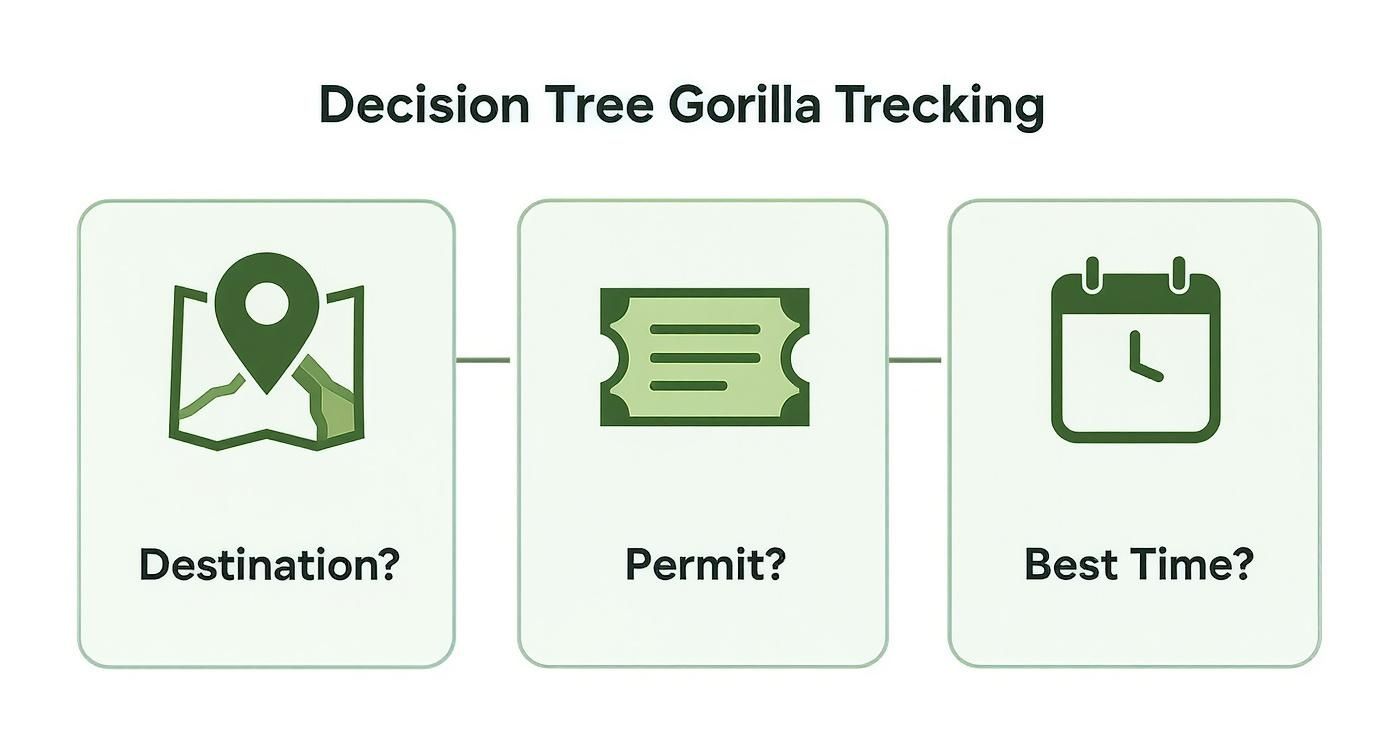
As the infographic shows, the big three decisions—where to go, when to lock in your permit, and the best time of year to travel—are all linked. Nailing these first sets you up for a smooth planning process.
Bwindi Impenetrable National Park: The Premier Choice
Bwindi is a name that commands respect in conservation circles. As a UNESCO World Heritage Site, it's the heart of gorilla tourism in Uganda, known for its rugged landscape and incredible biodiversity.
Bwindi is a massive park divided into four distinct trekking sectors, each offering a different environment. Gorilla trekking officially began here in 1993 as a pioneering effort to protect the gorillas while creating sustainable income for local communities. The park's four trekking regions are Buhoma, Ruhija, Rushaga, and Nkuringo. Each is home to several habituated gorilla families, with the Mubare group being the first to become accustomed to human presence in 1992.
Comparing Bwindi’s Four Gorilla Sectors
Selecting a sector is as important as choosing the park itself, as your gorilla permit is tied to a specific location.
-
Buhoma Sector (North): The original and most developed sector. It's the most accessible and often offers less strenuous treks. Buhoma is a great choice if you're looking for higher-end lodges.
-
Ruhija Sector (East): Known for its dramatic, high-altitude landscapes and cooler, misty weather. The treks can be challenging, but the breathtaking views make the effort worthwhile.
-
Rushaga Sector (South): This sector offers the most options, with the highest number of habituated gorilla families. This means more permits are available and a better chance of being assigned a shorter trek.
-
Nkuringo Sector (South): For those seeking a serious physical challenge. Nkuringo is widely considered the most demanding sector, with steep terrain. The reward is unparalleled views over the Virunga volcanoes.
A common misconception is that you can choose which gorilla family you see. In reality, you book a permit for a sector. The specific family you visit is assigned on the morning of your trek, largely based on your fitness level and where the gorillas happen to be that day.
Mgahinga Gorilla National Park: A Unique Alternative
While Bwindi often takes the spotlight, Mgahinga Gorilla National Park is a stunning, lesser-known alternative. It's part of the vast Virunga Conservation Area, a chain of volcanoes straddling Uganda, Rwanda, and the DRC.
Mgahinga is home to one habituated gorilla family: the Nyakagezi group. This family was once nomadic, frequently crossing the border, but has now settled permanently in Uganda, making Mgahinga a reliable destination. The trekking experience here is unique, often taking you through beautiful bamboo forests.
How to Secure Your Gorilla Permit and Budget Your Trip
Your gorilla permit is the single most critical component of your trip. Without it, you cannot go trekking. It is essential to book your permit six to twelve months in advance, especially if you plan to travel during the popular dry seasons. The permit dictates your travel dates and the specific park sector you'll visit, shaping your entire itinerary.
Getting Your Hands on a Permit
You can acquire a permit in two ways: directly through the Uganda Wildlife Authority (UWA) or by using a trusted local tour operator.
Booking with the UWA often involves emails or phone calls to check availability, followed by an international bank transfer. While possible, it can be a slow process.
The more common and recommended method is to work with a reputable tour operator in Uganda. They have established relationships with the UWA, can quickly confirm permit availability, and often pre-purchase permits. While they charge a small service fee, the convenience and peace of mind are invaluable. They can also bundle your permit with transport and accommodation into a seamless package.
How Much is a Gorilla Permit?
Understanding the permit cost is the first step in creating a realistic budget. The revenue is crucial for conservation in Bwindi Impenetrable National Park, which hosts approximately 36,000 trekkers annually. Uganda uses a tiered pricing system to fund these efforts.
Here’s a simple table of the current permit costs set by the Uganda Wildlife Authority.
Uganda Gorilla Permit Cost Breakdown
| Visitor Category | Permit Cost (USD Equivalent) | Booking Notes |
|---|---|---|
| Foreign Non-Residents | $800 | The standard rate for international tourists. |
| Foreign Residents | $700 | For foreigners with valid Ugandan work permits. |
| East African Citizens | UGX 300,000 (~$80) | For citizens of Uganda, Kenya, Tanzania, Rwanda, etc. |
These prices are per person for a single trek, which includes one hour with a gorilla family. The fees are fixed regardless of how you book. You can find more details on visitor stats at BwindiUgandaGorillasafaris.com.
A crucial note: Your permit fee is 100% non-refundable. This isn't a suggestion—it’s a rule. That's why having solid travel insurance that covers cancellations is non-negotiable.
Budgeting Beyond the Permit
The permit is a significant expense, but it's not the only one. To plan effectively, you need to consider the total cost of your trip.
Here’s a quick rundown of other major expenses:
- Accommodation: Options range from budget guesthouses ($50/night) to luxury lodges ($500+/night).
- Transport: Most travelers hire a private 4×4 with a driver-guide to get to Bwindi or Mgahinga, which adds several hundred dollars for a multi-day trip.
- Guides and Porters: UWA guides are included, but tipping is customary. Hiring a porter for about $20 is highly recommended to carry your gear and provide assistance on the trail.
Got more detailed questions about planning your finances? You can explore our detailed gorilla trekking FAQs for more in-depth answers.
A Real-World Budget Example
So, what does this all add up to? Let’s imagine a realistic budget for a solo traveller on a 3-day, mid-range gorilla safari starting from Kampala.
| Expense Item | Estimated Cost (USD) | Notes |
|---|---|---|
| Gorilla Permit | $800 | This price is fixed by the UWA. |
| Private Transport | $450 | A 4×4 vehicle with a driver & fuel for 3 days. |
| Accommodation | $200 | Two nights in a comfortable, mid-range lodge. |
| Food & Water | $90 | Budgeting about $30 per day for meals. |
| Porter Hire | $20 | Absolutely worth it for the day of the trek. |
| Tips | $40 | For guides, trackers, and lodge staff. |
| Total Estimated Cost | $1,600 | An approximate baseline for one person. |
As you can see, the final cost can easily be double the price of the permit alone. Keeping these numbers in mind from the start will help you plan an incredible trip without any financial stress.
What to Wear and When to Go: A Rainforest Reality Check
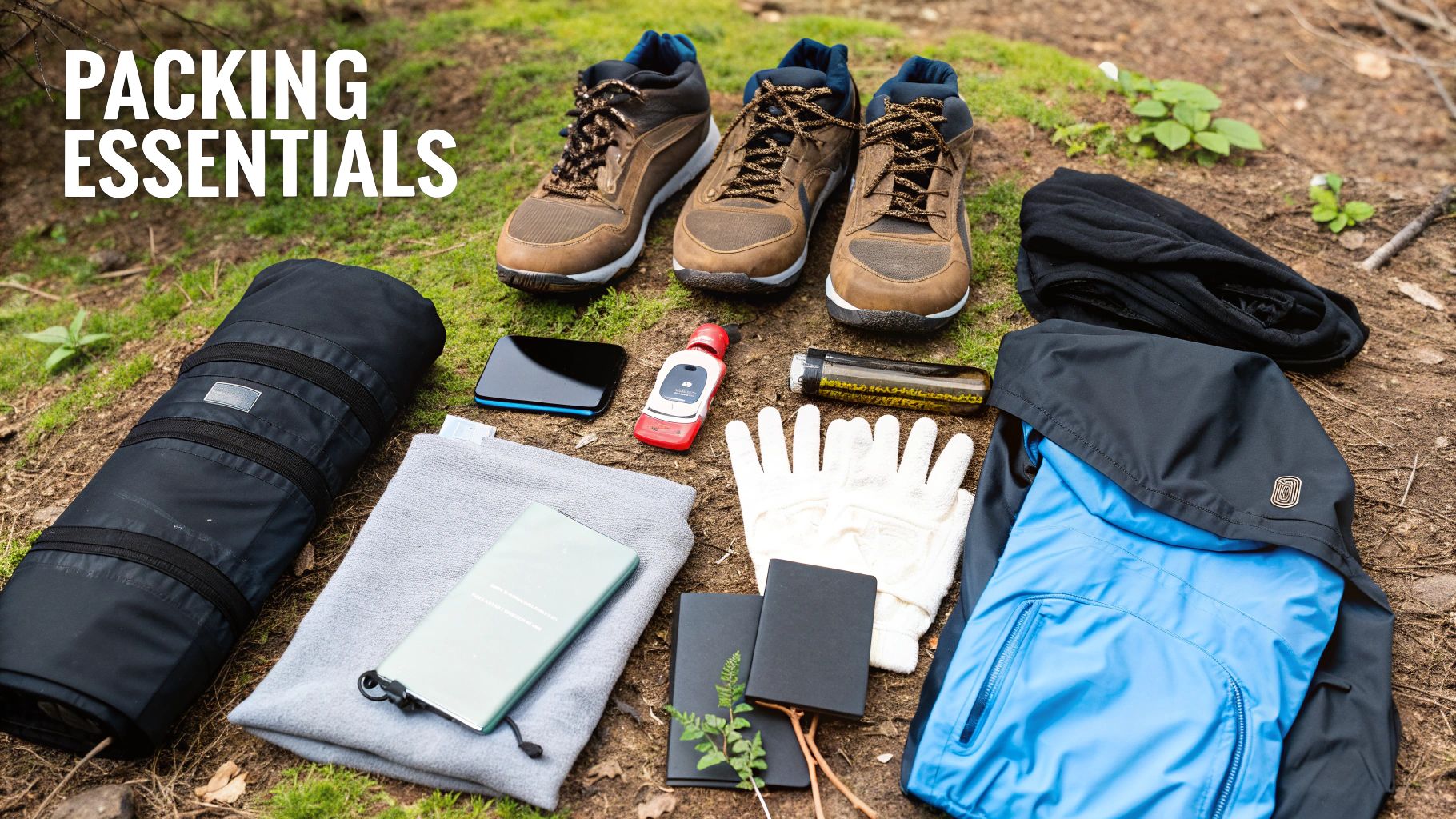
Choosing the best time to go gorilla trekking and packing the right gear are crucial for a comfortable and enjoyable experience. Proper preparation allows you to fully immerse yourself in the adventure without being distracted by discomfort or the unpredictable rainforest weather.
Choosing Your Season: Dry vs. Wet
Uganda's tropical climate means rain is possible year-round. However, the country has two distinct dry seasons and two wet seasons, each offering a different trekking experience.
- Dry Seasons (June-September & December-February): This is the most popular time to go. The trails are drier and less slippery, making the hike more manageable.
- Wet Seasons (March-May & October-November): Trekking during these months involves more mud and rain. However, the forest is at its most lush, and you may find better permit availability.
Here's a little insider secret for the wet season: the gorillas often stick to the lower slopes where food is plentiful. This can sometimes mean a shorter (though definitely muddier) trek to find them compared to the dry season, when they might wander further up the mountains in search of food.
Your Essential Packing List: What Really Matters
Packing for the rainforest requires a strategic approach focused on layers, waterproofing, and protection. This isn't just a list of items to bring; it's a guide to the non-negotiables that will keep you safe and comfortable.
Footwear and Clothing
Your trek starts with your feet. A pair of sturdy, waterproof hiking boots with excellent grip is the most important item you will pack. They provide stability on steep, uneven, and slick terrain.
For clothing, layers are essential. Mornings can be cool at altitude, but you'll warm up quickly during the hike.
- Waterproof Hiking Boots: Ensure they are well broken-in to prevent blisters. Good ankle support is a must.
- Long-Sleeved Shirts and Trousers: Wear neutral colors like khaki, green, or brown. This protects you from scratches, stinging nettles, and insects.
- A Solid Rain Jacket: A lightweight, breathable rain jacket or poncho is essential, as rain can start unexpectedly.
- Gardening Gloves: A sturdy pair of gloves will protect your hands from thorns and nettles when you grab onto vegetation for balance.
Gear and Other Essentials
A few additional items, carried in a small waterproof daypack, will make your trek smoother. Hiring a local porter for around $20 is highly recommended; it supports the community and frees you up to focus on the hike. For more travel inspiration, you can explore other incredible East African activities.
What to Put in Your Daypack:
- Insect Repellent: Use a strong repellent containing DEET.
- Water and High-Energy Snacks: Carry at least 1.5 litres of water. Energy bars, nuts, or dried fruit are great for maintaining energy.
- Camera and Spares: Keep your camera in a waterproof bag. Remember that flash photography is strictly prohibited. Pack extra batteries and memory cards.
- Cash for Tips: Have small notes of Ugandan Shillings or US Dollars ready for tipping your guides, trackers, and porter.
What to Expect on Your Gorilla Trekking Day
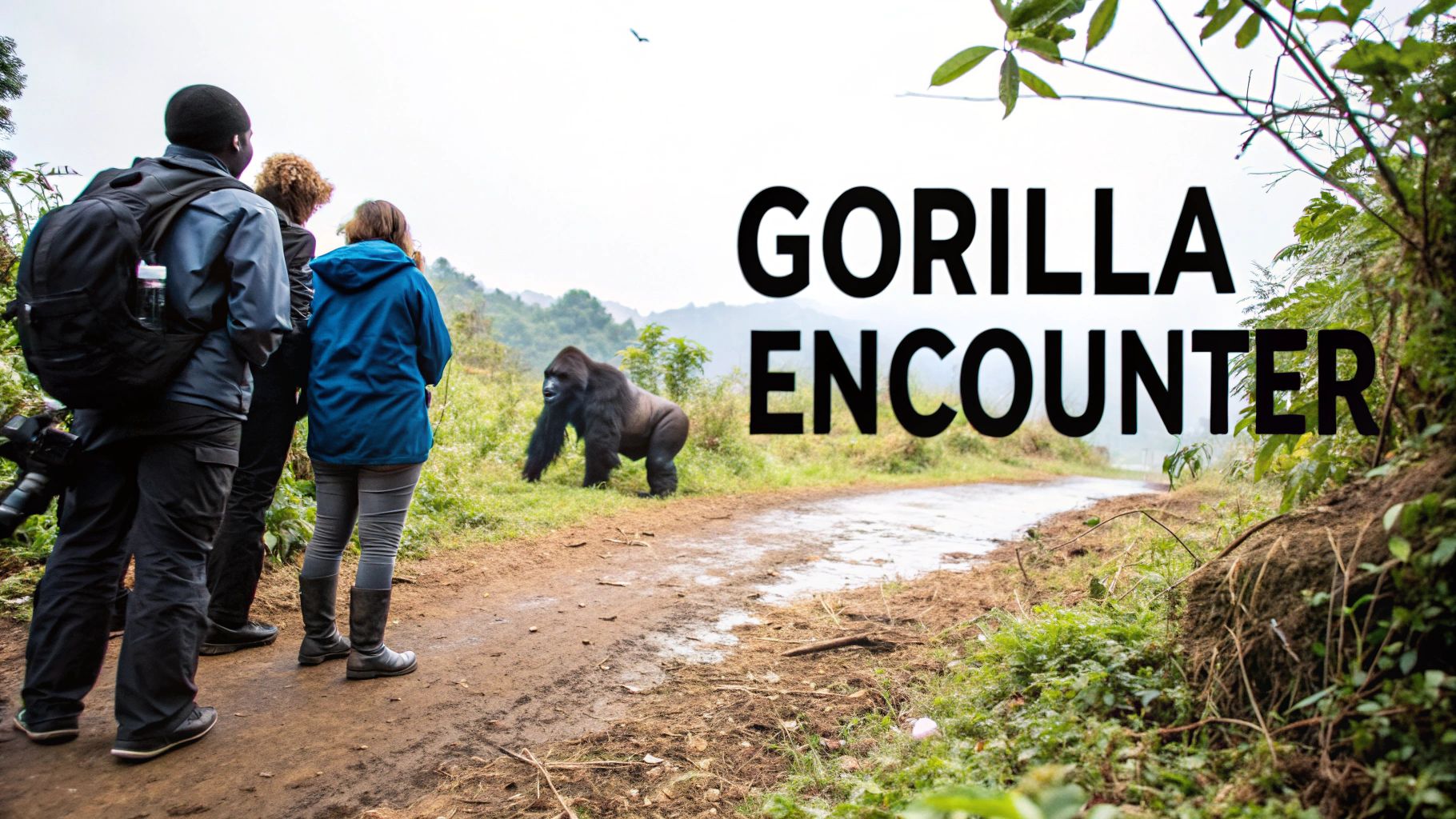
The day of your gorilla trek is a long, physically demanding, and ultimately rewarding experience. You will be up before sunrise for a hike that can last anywhere from two to eight hours through steep, muddy rainforest terrain. The trek culminates in one magical hour spent observing a mountain gorilla family in their natural habitat.
The entire experience is a carefully managed blend of adventure, conservation, and respect for these incredible animals. It is physically challenging, but the emotional reward is unforgettable.
The Morning Briefing at Park Headquarters
Your day begins around 7:30 AM at the park headquarters for a crucial briefing. Here, Uganda Wildlife Authority (UWA) rangers will check your passport and permit before assigning you to a specific gorilla family. This assignment is based on the group's perceived fitness level and the known location of the gorilla families, as advance trackers are already in the forest. If you have any mobility concerns, this is the time to mention them.
During the briefing, you will review the essential rules of conduct:
- Maintain a safe distance: Stay at least 7-10 metres (23-33 feet) from the gorillas.
- No flash photography: Sudden flashes can startle or agitate the gorillas.
- Speak in whispers: Keep your voice low to maintain a calm environment.
- Do not trek if you are ill: Gorillas are highly susceptible to human diseases. If you feel sick, you must not participate.
The Trek Through the Impenetrable Forest
After the briefing, you will drive to the trailhead to begin the trek. The name "Bwindi Impenetrable Forest" quickly makes sense as you navigate steep, muddy paths and dense vegetation. The duration and difficulty of the hike are unpredictable. You might find your assigned family after just an hour, or you could trek for four hours or more. Your UWA ranger will maintain radio contact with trackers who pinpoint the gorillas' location using signs like broken branches and fresh dung.
"Impenetrable" isn't just a dramatic name. Your guides will often use machetes to literally clear a path for you through the dense undergrowth. This is a genuine jungle expedition, not a walk on a manicured trail. Stamina and a positive attitude are your best friends here.
That Unforgettable Hour with the Gorillas
When you finally reach the gorillas, your guide will signal for silence. You will leave your bags and walking sticks with the porters and approach quietly with only your camera. The next 60 minutes are yours to observe the family.
You might see a massive silverback watching over his family, juveniles playing, or a mother grooming her infant. It is an incredibly peaceful and intimate experience. The rangers remain nearby to ensure the rules are followed and the encounter is safe for both you and the gorillas. This strict, respectful approach has contributed to the successful conservation of the mountain gorilla population, which now stands at around 1,063 individuals. Bwindi is home to about 459 of them, and your permit fee directly funds their protection.
The Return Journey and Time to Reflect
Once your hour is complete, your guide will lead you back out of the forest. The return trek can be just as challenging, but you will be filled with a sense of awe. Back at the headquarters, you will receive a certificate commemorating your accomplishment.
The entire day is a powerful reminder of the importance of responsible tourism. To share your story or get tips from other travelers, consider joining the discussion on the https://helloeastafrica.com/forums/forum/uganda/.
Got Questions About Your Gorilla Trek? We've Got Answers
As your trip approaches, you might have some last-minute questions about the physical demands, safety, or what happens if you get sick. Getting clear answers will help you feel more confident and prepared for this once-in-a-lifetime adventure.
How Fit Do I Really Need to Be?
You don't need to be an elite athlete, but a good level of fitness will make the experience more enjoyable. The trek can last two to eight hours on steep, muddy terrain at altitude.
- Preparation: Start with cardiovascular exercises like hiking, jogging, or stair climbing a few months before your trip.
- On the day: Be honest with the rangers about your fitness level during the morning briefing. They can often assign you to a group trekking to a closer gorilla family.
Here's a pro tip: hire a porter. Seriously, it's one of the best decisions you can make, no matter how fit you are. For around $20, they’ll carry your backpack and, more importantly, offer a helping hand on those tricky, slippery sections. It makes a huge difference and puts money directly into the local community.
What If I Get Sick and Can't Trek?
If you have any contagious illness—such as a cold, flu, or stomach bug—you will not be allowed to trek. This rule is strictly enforced to protect the gorillas from human diseases.
If you feel unwell on the morning of your trek, you must inform your guide. The Uganda Wildlife Authority (UWA) may offer a 50% refund on your permit if you cancel on the day due to illness, though this requires a certificate from a local doctor. Your best protection is comprehensive travel insurance that covers trip cancellation for medical reasons.
Is Gorilla Trekking Actually Safe?
Yes, gorilla trekking is a very safe activity when you follow the rules and listen to your guides. Your safety and the gorillas' well-being are the top priorities.
- Expert Guides: Every group is led by highly trained, armed UWA rangers who are experts in the forest environment.
- Habituated Gorillas: The gorilla families visited are accustomed to human presence and view you as a neutral part of their environment.
- Strict Rules: Adhering to guidelines, such as maintaining a safe distance (7-10 metres), speaking in whispers, and avoiding flash photography, ensures a respectful and safe encounter for everyone.
Can My Kids Go Gorilla Trekking?
The minimum age for gorilla trekking in Uganda is 15 years old. This is a strict regulation with no exceptions. Rangers will verify the age of every trekker by checking their passport on the morning of the hike.
This rule exists because the trek can be physically demanding, and the behavior of young children can be unpredictable around wild animals. If you are traveling with children under 15, you will need to arrange for childcare at your lodge during the trek.
Ready to turn your dream of a gorilla trekking trip into reality? At HelloEastAfrica, we connect you with trusted local operators, incredible lodges, and all the tools you need to plan an unforgettable adventure. Start planning your journey today!
What will your Uganda trip cost?
Use the Uganda Trip Cost Calculator to see a realistic starting range before you ask for a human-checked quote.


Comment (0)