

The best game parks in Uganda offer a unique blend of savannah and forest adventures, including Queen Elizabeth National Park for its tree-climbing lions, Murchison Falls National Park for its powerful waterfall, Bwindi Impenetrable National Park for mountain gorilla trekking, and the remote Kidepo Valley National Park for its rugged wilderness. Each park provides a distinct safari experience, from classic game drives to primate tracking in ancient rainforests.
Uganda's parks are renowned for their incredible biodiversity, combining East Africa's open plains with West Africa's dense jungles. This variety allows visitors to track chimpanzees in Kibale Forest one day and watch elephants on the Kazinga Channel the next. Thanks to conservation efforts by the Uganda Wildlife Authority (UWA), these protected areas are less crowded than many other safari destinations, offering a more personal and authentic wildlife experience.
What are the Top Game Parks in Uganda?
Uganda is home to ten national parks, each with a unique character and standout attractions. Knowing the highlights is key to planning a trip that matches your interests, whether you're seeking the "Big Five," rare primates, or dramatic landscapes.
A Glimpse into Uganda's Top Parks
Figuring out where to go can be the hardest part of planning your trip. This infographic provides a quick summary of the unique highlights and locations of Uganda's most famous game parks.
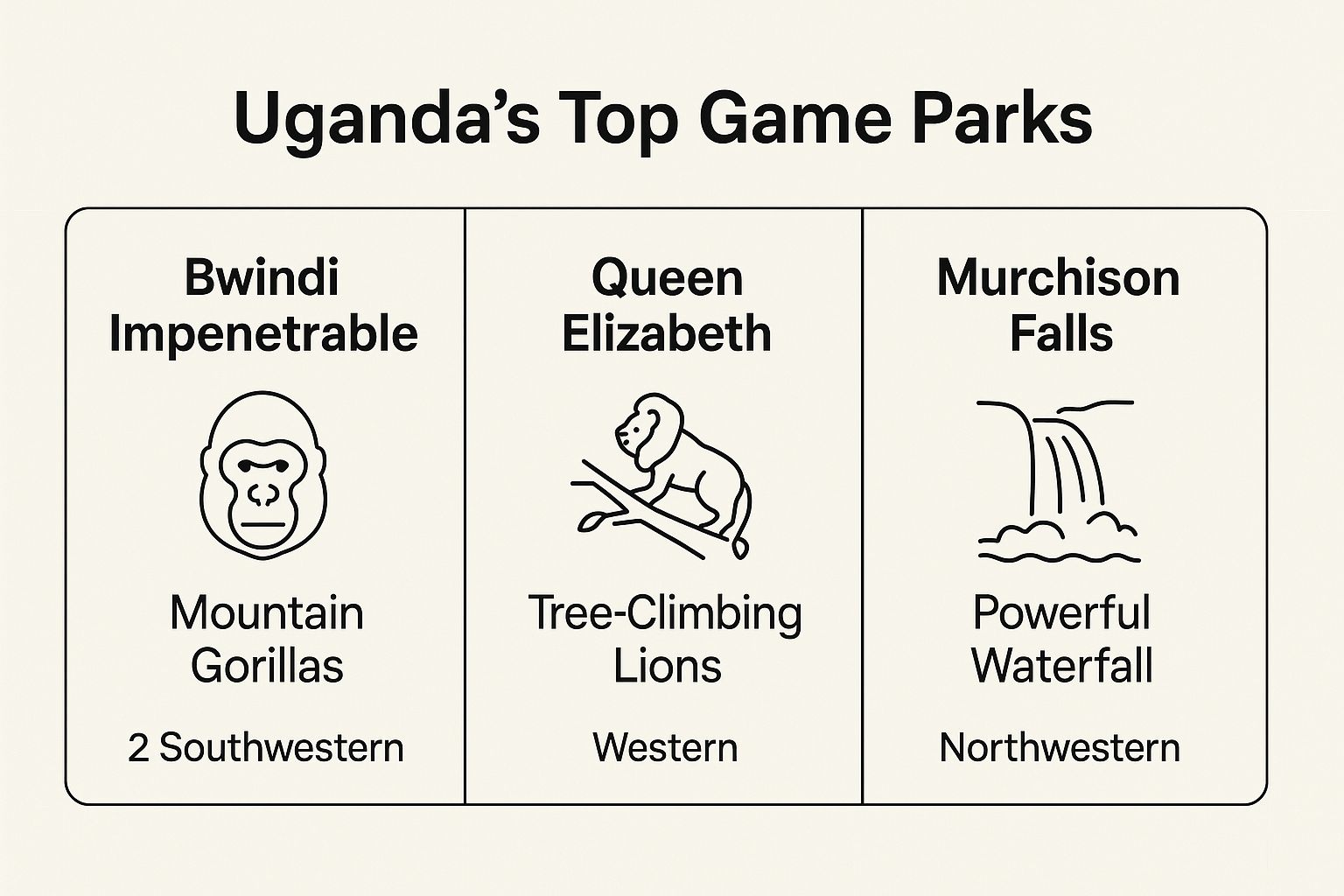
As you can see, the parks are scattered across the country. Bwindi sits in the misty southwest, Queen Elizabeth is in the west, and Murchison Falls dominates the northwest. Each one offers a completely different adventure.
To help you get a clearer picture, here is a quick breakdown of what makes each of Uganda's premier game parks a must-visit destination.
Quick Overview of Uganda's Premier Game Parks
| Game Park | Key Wildlife Attraction | Best Known For | Top Activities |
|---|---|---|---|
| Bwindi Impenetrable National Park | Mountain Gorillas | World-class primate trekking in a misty, ancient rainforest. | Gorilla tracking, birdwatching, Batwa cultural experiences. |
| Queen Elizabeth National Park | Tree-Climbing Lions | Unmatched biodiversity, from savannahs to crater lakes. | Game drives, Kazinga Channel boat safari, chimp tracking. |
| Murchison Falls National Park | The Powerful Murchison Falls | The dramatic waterfall and boat safaris on the Nile River. | Boat safaris to the falls, game drives, birdwatching. |
| Kidepo Valley National Park | Vast Buffalo Herds & Cheetahs | Its remote, rugged wilderness and exclusive safari feel. | Game drives, nature walks, cultural visits to Karamojong villages. |
This table just scratches the surface, but it gives you a solid starting point for deciding which park—or combination of parks—is the right fit for your safari adventure.
What Makes Ugandan Safaris Special?
A safari in Uganda is far more than just sitting in a vehicle. It's an active, immersive experience that gets you out on foot and on the water, bringing you face-to-face with nature in a way that few other destinations can.
Uganda’s blend of primate trekking and classic savannah safaris is truly exceptional. It’s one of the few places on Earth where you can meet a gorilla family in the morning and watch elephants by a river in the afternoon.
The sheer range of activities is what makes it unforgettable:
- Primate Trekking: Uganda is arguably the best place in the world to see mountain gorillas and chimpanzees in their natural habitat. It's a humbling and powerful experience.
- Boat Safaris: Gliding along the Nile River in Murchison or the Kazinga Channel in Queen Elizabeth offers a unique perspective. You’ll see pods of hippos, massive crocodiles, and herds of buffalo and elephants at the water's edge.
- Birdwatching: Home to over 1,000 bird species, including the sought-after Shoebill stork, Uganda is a true bird-watcher's paradise.
For travellers ready to plan an unforgettable adventure, you can explore comprehensive safari options across Uganda to find the perfect itinerary.
Exploring Uganda’s Iconic Savannah Parks
Uganda's savannah parks are the heart of the classic African safari experience. These are places of vast, golden grasslands dotted with acacia trees and teeming with iconic wildlife. From the famous plains of Queen Elizabeth to the wild, remote landscapes of Kidepo Valley, these parks deliver unforgettable game drives and a direct connection to the African bush.
Each park has its own distinct personality, shaped by its unique ecosystem and the incredible animals that have made it their home.
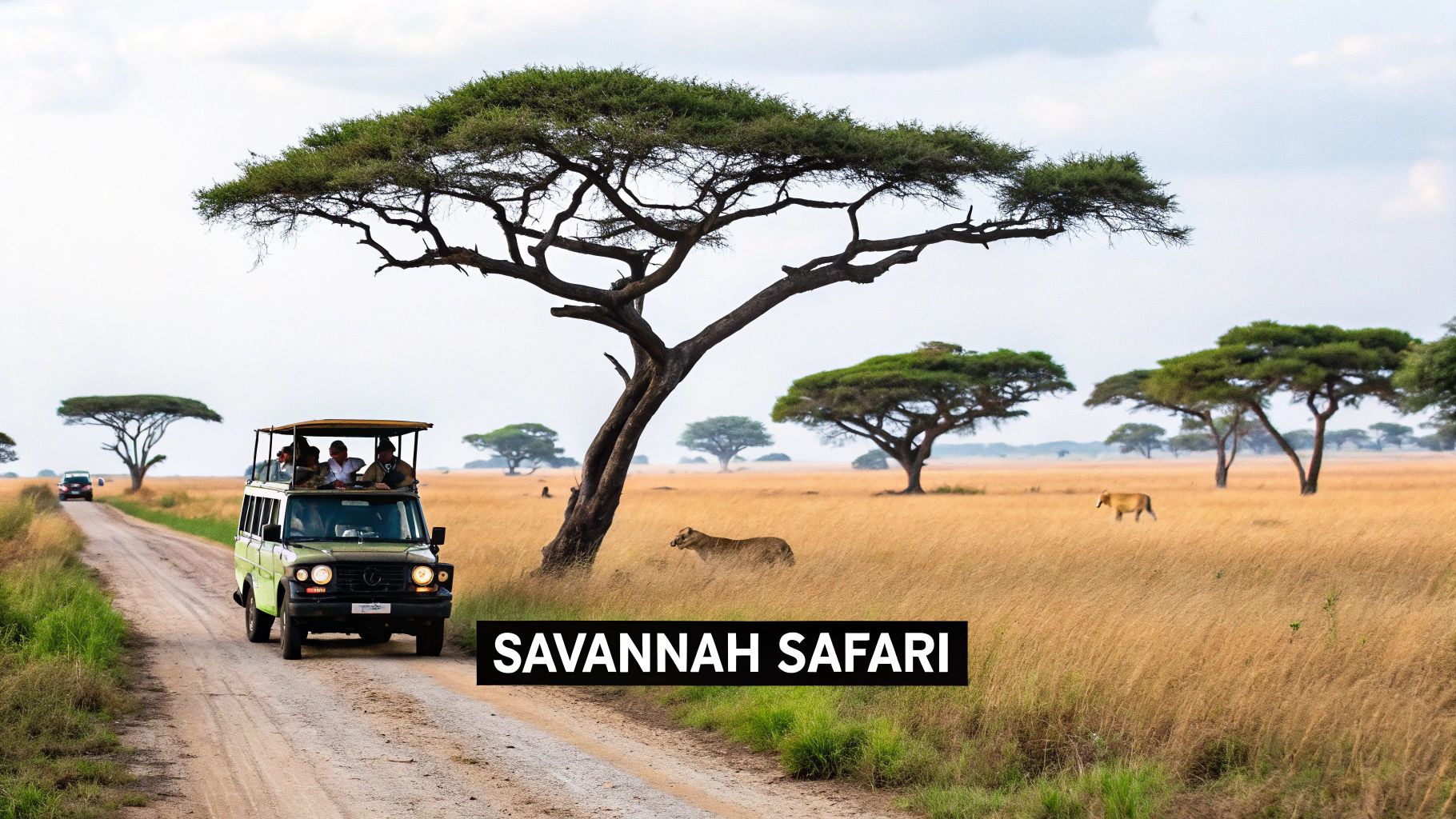
A game drive in one of these parks is an experience for all the senses—the low rumble of the 4×4, the anticipation of what's around the next bend, and the breathtaking moment you spot a herd of elephants silhouetted against a rising sun.
Queen Elizabeth National Park: A Mosaic of Ecosystems
Queen Elizabeth National Park is Uganda's most famous safari destination due to its staggering biodiversity. It's a patchwork of different habitats, including open savannah, shady forests, sparkling crater lakes, and lush wetlands. This variety supports an incredible density of wildlife.
The park's biggest attraction is its unique population of tree-climbing lions in the southern Ishasha sector. It’s an unforgettable sight to spot these powerful predators lounging on the thick branches of a fig tree.
Beyond the famous lions, the Kazinga Channel is a must-see. A boat safari here offers amazing wildlife viewing:
- Hippos: The channel has one of the world's largest concentrations of hippos.
- Elephants and Buffalo: Expect to see large herds coming down to the water’s edge for a drink.
- Birdlife: With over 600 bird species recorded, it's a birdwatcher's paradise.
These parks are vital sanctuaries, and Queen Elizabeth National Park is a cornerstone of the country's conservation work. These efforts, detailed by organisations like the Uganda Wildlife Authority, not only protect the animals but also fuel an eco-tourism industry that supports local communities.
Murchison Falls National Park: Where the Nile Explodes
As Uganda’s largest protected area, Murchison Falls National Park is defined by the power of the Nile River. The park's centrepiece is the magnificent Murchison Falls, where the entire Nile is forced through a narrow 7-metre gorge before crashing 43 metres below. The roar of the water is deafening and a boat safari to the base of the falls is an essential experience.
On game drives through the park’s grasslands, you're likely to encounter:
- The elegant Rothschild's giraffe, a rare subspecies found in few locations.
- Massive herds of buffalo and elephants.
- Lions, leopards, and hyenas.
A trip to Murchison Falls is a powerful reminder of nature’s raw force. The combination of a serene boat cruise on the Nile and a classic, thrilling game drive makes it one of the most complete safari destinations you can find.
Kidepo Valley National Park: A Remote Wilderness
Tucked away in the far northeastern corner of Uganda, Kidepo Valley is the country's most remote and rugged national park. This isolation makes a safari here feel exclusive and untouched. The landscape is breathtaking, with vast, semi-arid plains framed by jagged mountains.
Kidepo is legendary for its enormous herds of buffalo, which can number in the thousands. It is also one of the few parks in Uganda where you have a chance of spotting the elusive cheetah. A journey to Kidepo is for the true adventurer seeking pristine wilderness far from any crowds. To see how you can explore these legendary parks, our safaris and tours page has some great options to get you started.
Uganda's Primate Parks: Forest Encounters
Uganda’s ancient, misty forests offer a different kind of magic, where the safari experience becomes incredibly personal and profound. This is the world of primate encounters, centered around two incredible parks: Bwindi Impenetrable National Park and Kibale Forest National Park. These vital sanctuaries offer a rare glimpse into the lives of our closest animal relatives.

The journey to find them is half the adventure. As you trek through the lush jungle, with a symphony of birds and insects all around, the anticipation builds to a level you just can't get anywhere else.
Bwindi Impenetrable National Park: The Gorilla Sanctuary
Bwindi Impenetrable National Park, a UNESCO World Heritage Site, is a massive world of steep, forested ridges and deep valleys. It is a safe haven for nearly half of all the mountain gorillas left on Earth, making it the premier destination for gorilla trekking.
The experience is often described as life-changing. After a briefing, you head deep into the forest with expert Uganda Wildlife Authority (UWA) guides. The trek can be challenging, but the reward is unforgettable. You get exactly one hour with a gorilla family, a rule strictly enforced to protect them. In that hour, you watch a colossal silverback guard his family, see youngsters play, and feel a humbling connection to these gentle giants.
A few things to know before you go:
- Gorilla Permits: These are essential and must be booked months in advance as they sell out fast.
- Fitness Level: A reasonable level of fitness is required for the steep and often muddy terrain.
- Responsible Tourism: The permit fee directly funds gorilla conservation and supports local communities.
Kibale Forest: The Primate Capital of the World
If Bwindi is the kingdom of the gorillas, then Kibale Forest is the capital for chimpanzees. Tracking chimps is a wild, high-energy adventure. Chimps are noisy and always on the move, and you'll often hear their chorus of hoots and screams before you see them. The trek is more of a chase, following their calls as they crash through the canopy above.
The difference between gorilla and chimp trekking is night and day. With gorillas, you're a quiet observer of gentle giants. With chimpanzees, you're swept up in a whirlwind of energy and drama, chasing them through the forest.
For a deeper experience, Kibale offers the Chimpanzee Habituation Experience, a full day with researchers following a chimp group from morning until they nest at night.
Comparing the Primate Experiences
Choosing between gorilla and chimp trekking is tough, as both are unforgettable. Here’s a quick breakdown to help you decide.
| Feature | Mountain Gorilla Trekking (Bwindi) | Chimpanzee Tracking (Kibale) |
|---|---|---|
| Pace of Trek | Slow to strenuous, often on steep and muddy trails. | Fast-paced, involves more walking and sometimes running to keep up. |
| Animal Behaviour | Calm, gentle, and peaceful. You observe a family group at close quarters. | Energetic, loud, and dramatic. It's a more active and unpredictable chase. |
| Sighting Certainty | Extremely high (over 99%), as trackers find the families before you set off. | High, but chimps are more mobile and can be high up in the trees. |
| Group Size | A strict maximum of 8 visitors per gorilla family. | Usually small groups, but the number can vary. |
Many people build their Ugandan safari around doing both. For more first-hand tips, see what other travellers are saying in the community forums for Uganda.
Exploring Uganda’s Hidden Gem Parks
Beyond the big names, Uganda has several lesser-known parks that offer unique and uncrowded adventures. For returning visitors or those craving an experience off the beaten path, these game parks in Uganda reveal a different side of the country’s wilderness. These parks offer intimate wildlife encounters, distinct activities, and the feeling of having the place to yourself.
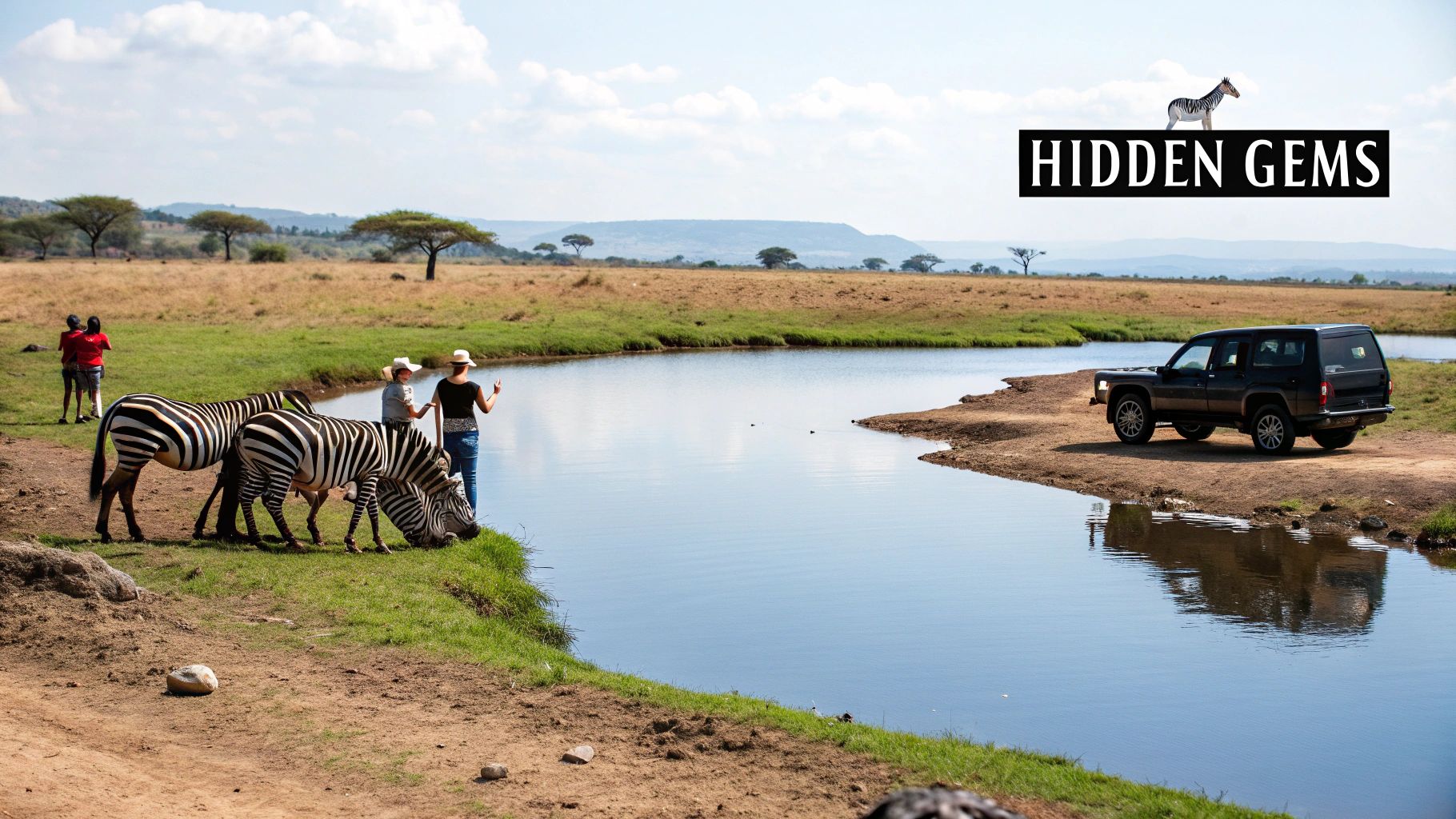
Venturing beyond the main track allows you to swap a 4×4 for a horse or your own two feet, exploring ancient forests and experiencing the quiet thrill of discovery.
Lake Mburo: The Accessible Gem
Located conveniently between Kampala and the gorilla highlands, Lake Mburo National Park is Uganda’s most accessible savannah park. Its landscape of rolling hills, acacia woodlands, and shimmering lakes is captivating. Because it lacks large predator populations, you can experience the bush in ways not possible elsewhere.
- Walking Safaris: With an armed ranger, you can explore on foot and walk quietly among herds of Burchell's zebra.
- Horseback Safaris: Canter alongside giraffes and watch impala from the saddle for a serene way to connect with the landscape.
- Night Game Drives: Spot elusive nocturnal creatures like leopards, hyenas, and bushbabies.
Semuliki: The Birder’s Paradise
In the Albertine Rift Valley, Semuliki National Park protects an extension of the Congo Basin's great Ituri Forest, creating a habitat unique within Uganda. It is famous for the Sempaya Hot Springs, a geothermal spectacle where boiling water bubbles up from the earth.
The park's real treasure is its birdlife, with around 441 recorded bird species, including many Congo-Basin specialists you won't find anywhere else in East Africa.
For serious birders, Semuliki is non-negotiable. It’s the one place in the country where you have a realistic chance of spotting rare species like the Nkulengu Rail, Yellow-throated Cuckoo, and Piping Hornbill. It offers a completely different birding checklist.
This commitment to protecting diverse ecosystems is a nationwide effort. Uganda recently expanded its network to 16 officially gazetted national parks, upgrading six former reserves to reduce human-wildlife conflict and boost eco-tourism. You can learn more about Uganda's new national parks and the government's forward-thinking strategy.
How to Plan Your Ugandan Safari Itinerary
Planning your Ugandan safari is about connecting what you want to see with your time and budget. A classic 7 to 10-day trip allows enough time to mix savannah game drives with primate trekking. The key is planning a logical route to minimize travel time and maximize your experience in the parks.
Guided Tour or Self-Drive Adventure?
One of the first big decisions is how to get around.
A guided tour is the most popular and stress-free option. An experienced driver-guide handles logistics, knows the roads, and is skilled at spotting wildlife. Their local insights are invaluable.
A self-drive safari offers ultimate freedom and flexibility. It requires more preparation and confidence on rough roads, but the payoff is a journey that is uniquely yours.
Sample Itineraries for Your Trip
Here are a couple of tried-and-tested itineraries that showcase the best of Uganda’s game parks.
The Classic 10-Day Safari
This trip is perfect for first-timers, delivering a mix of big game and primate encounters.
- Days 1-3 Murchison Falls National Park: Start in the north with boat safaris on the Nile and game drives to find giraffes and elephants.
- Days 4-5 Kibale Forest National Park: Journey south for an incredible chimpanzee tracking experience.
- Days 6-7 Queen Elizabeth National Park: Continue to this diverse park for game drives and a boat cruise on the hippo-filled Kazinga Channel.
- Days 8-10 Bwindi Impenetrable National Park: End with a life-changing trek to see a mountain gorilla family.
This route brilliantly weaves together Uganda's top three national parks into one seamless adventure. You get the "Big Four" on the savannahs and the world's most impressive primate experiences—all in one trip.
Primate-Focused 7-Day Trip
If gorillas and chimps are your priority, this shorter itinerary focuses on the southwestern forests.
- Days 1-2 Kibale Forest: Head directly to Kibale for your chimpanzee tracking adventure.
- Days 3-4 Queen Elizabeth (Ishasha): Break up the drive south with a stop in the Ishasha sector, famous for its tree-climbing lions.
- Days 5-7 Bwindi Impenetrable Forest: This gives you ample time for the mountain gorilla trek before heading home.
When to Visit Uganda's Game Parks
Uganda's equatorial climate is stable, but distinct wet and dry seasons affect travel and wildlife viewing.
| Season | Months | Weather Conditions | Wildlife Viewing Highlights |
|---|---|---|---|
| Long Dry Season | June to August | Sunny, clear skies, and minimal rainfall. Roads are easy to navigate. | Excellent! Animals gather around water sources, making them easier to spot. Ideal for gorilla trekking. |
| Short Wet Season | September to November | Afternoon thunderstorms are common, but often brief. The landscape becomes lush and green. | Great for birdwatching as migratory birds arrive. Scenery is stunningly vibrant. |
| Short Dry Season | December to February | Generally dry and hot. Good travel conditions return. | Prime game viewing conditions, similar to the long dry season. A popular time for holiday travel. |
| Long Wet Season | March to May | The wettest time of year, with heavy and prolonged rainfall. Some roads can be challenging. | Lower tourist numbers and often lower prices. The parks are beautifully green and full of life. |
Ultimately, there's no bad time to visit. Dry seasons offer easier travel and more concentrated wildlife, while wet seasons bring lush landscapes and fewer crowds.
Budgeting and Accommodation Choices
Your safari cost depends mainly on accommodation and transport. Uganda offers a wide range of options for every budget.
- Budget: Community campsites or basic guesthouses are great options. A self-drive trip with camping gear is a fantastic way to save.
- Mid-Range: Comfortable safari lodges and tented camps offer a great balance of comfort and value.
- Luxury: Top-tier lodges provide stunning locations, gourmet meals, and impeccable service for an unforgettable trip.
When booking, stick with trusted, well-reviewed properties. You can explore a wide selection of Ugandan hotels and lodges to find the perfect places for your itinerary and budget.
Supporting Conservation and Community Tourism
When you visit Uganda's game parks, your journey supports a larger story connecting conservation with local communities. Responsible tourism is a powerful force for good, and every safari, park fee, and purchase you make contributes to this positive cycle. The money you spend helps fund organisations like the Uganda Wildlife Authority (UWA), supporting anti-poaching efforts and managing the relationship between people and wildlife.
How Your Trip Powers Conservation
Sustainable tourism provides a powerful incentive for local people to protect their natural world. When communities benefit directly from tourism, they become the most dedicated guardians of the parks. This model is crucial for protecting Uganda's wild spaces. Currently, terrestrial protected areas—including the famous game parks in Uganda—cover about 16.1% of the country's total land. This commitment depends on the economic fuel provided by responsible travellers. You can explore Uganda's land protection data to see its impact.
Getting Involved with Community Projects
One of the best ways to make a tangible difference is by supporting community-based tourism initiatives. These projects channel tourism revenue directly to local families, improving livelihoods and fostering a strong conservation mindset. These experiences also offer a deeper, more authentic connection to Ugandan culture.
By choosing community-led activities, you're not just a tourist; you're a partner in conservation. Your visit helps fund schools, improve healthcare, and create a future where both people and wildlife can thrive together.
Here are a few examples of initiatives to look for:
- Village Walks: Join a local guide to learn about traditional customs, farming practices, and daily life.
- Local Craft Markets: Purchase authentic, handmade crafts directly from artisans.
- Cultural Performances: Enjoy traditional music and dance that celebrates local heritage and provides meaningful employment.
These interactions build a genuine connection and leave you with a profound appreciation for how wildlife, land, and people are interwoven in Uganda.
Your Uganda Safari Questions, Answered
Planning a safari naturally brings up questions. Here are straightforward answers to the most common queries about organising a Ugandan adventure.
What Is the Best Time of Year to Visit Game Parks in Uganda?
The best time to visit is during Uganda's two dry seasons: June to August and December to February. The weather is pleasant, roads are in good condition, and wildlife is easier to spot around water sources. These months are also ideal for gorilla and chimpanzee trekking, as forest trails are less slippery. However, the wet seasons (March-May and September-November) offer lush green landscapes, fewer tourists, and excellent birdwatching.
Is It Safe to Travel to Uganda's National Parks?
Yes, travelling within Uganda's national parks is generally very safe. All parks are managed by the Uganda Wildlife Authority (UWA), and professional, trained rangers accompany you on all activities like game drives, walking safaris, and primate treks. For added peace of mind, travel with a reputable tour operator. As with any international travel, use common sense: listen to your guide, secure your valuables, and be aware of your surroundings.
What Vaccinations Are Needed for a Ugandan Safari?
You should consult your doctor or a travel clinic several months before your trip. A Yellow Fever vaccination certificate is mandatory for entry into Uganda. Your doctor will likely also recommend vaccinations for Hepatitis A and B, Typhoid, and Tetanus. Anti-malaria medication is crucial, as malaria is a risk throughout the country. Use a good insect repellent and wear long sleeves and trousers, especially in the evenings, for extra protection.
Ready to turn all this planning into an incredible adventure? HelloEastAfrica is the perfect place to explore, compare, and book the very best safaris, lodges, and activities in the region. Start building your journey today at https://helloeastafrica.com.
What will your Uganda trip cost?
Use the Uganda Trip Cost Calculator to see a realistic starting range before you ask for a human-checked quote.
Article created using Outrank


Comment (0)