

The primary currency used in Uganda is the Ugandan Shilling (UGX). While US Dollars (USD) are often accepted for major tourist expenses like safari tours, park permits, and high-end lodges, you will need Ugandan Shillings for all daily transactions. For things like local meals, taxi rides, and shopping at markets, carrying shillings is essential. It is best to exchange a small amount of money at the airport upon arrival and then get better rates at a licensed forex bureau in a major city like Kampala.
Your Essential Guide to Money in Uganda
Planning a trip to "The Pearl of Africa" is exciting, but understanding the local money situation is crucial for a smooth journey. This guide provides practical advice for obtaining, using, and managing your funds in Uganda. Our goal is to help you handle your finances confidently so you can focus on the incredible adventure that awaits you.
We will cover how to exchange money safely, where to find reliable ATMs, and how to set a realistic travel budget. Having the right currency on hand, whether you're in Kampala's busy markets or the country's serene national parks, makes all the difference.
The Role of Foreign Currency
While the Ugandan Shilling is the official currency, some prices, especially in the tourism sector, are listed in other currencies. Understanding this dual system before you go can prevent confusion.
- US Dollar (USD): The USD is the dominant foreign currency for tourism in Uganda. Major expenses such as gorilla trekking permits, safari lodge stays, and tour operator fees are often priced and paid for in US Dollars.
- British Pound (GBP) & Euro (EUR): These currencies are easily exchanged at forex bureaus and major hotels in cities like Kampala and Entebbe. However, they are not as widely accepted for direct payments as the US Dollar.
The Ugandan Shilling has a rich history, with seven major updates since the country's independence in 1966. A significant change occurred in 1987 with the introduction of a new shilling to combat high inflation. Today, Uganda's foreign exchange market is well-regulated, allowing travelers to easily convert their home currency upon arrival.
A critical tip for those bringing US Dollars: ensure your banknotes are clean, crisp, and printed after 2009. Bills that are old, torn, or marked are often rejected by vendors and currency exchangers due to counterfeit concerns.
Before we go further, here is a quick overview of essential currency facts for your trip.
Quick Currency Facts for Travelers in Uganda
| Currency Detail | Key Information |
|---|---|
| Official Currency | Ugandan Shilling (UGX) |
| Currency Code | UGX |
| Common Banknotes | 1,000, 2,000, 5,000, 10,000, 20,000, 50,000 |
| Common Coins | 50, 100, 200, 500, 1,000 |
| Accepted Foreign Currency | US Dollar (USD) is widely used for tourism. |
| ATM Availability | Good in major cities; very limited in rural areas. |
Knowing these basics will help you manage your finances more effectively during your travels.
If you are looking for ideas on where to spend your shillings, our guide to the best places to visit in Uganda offers plenty of inspiration for planning an unforgettable journey.
Understanding the Ugandan Shilling
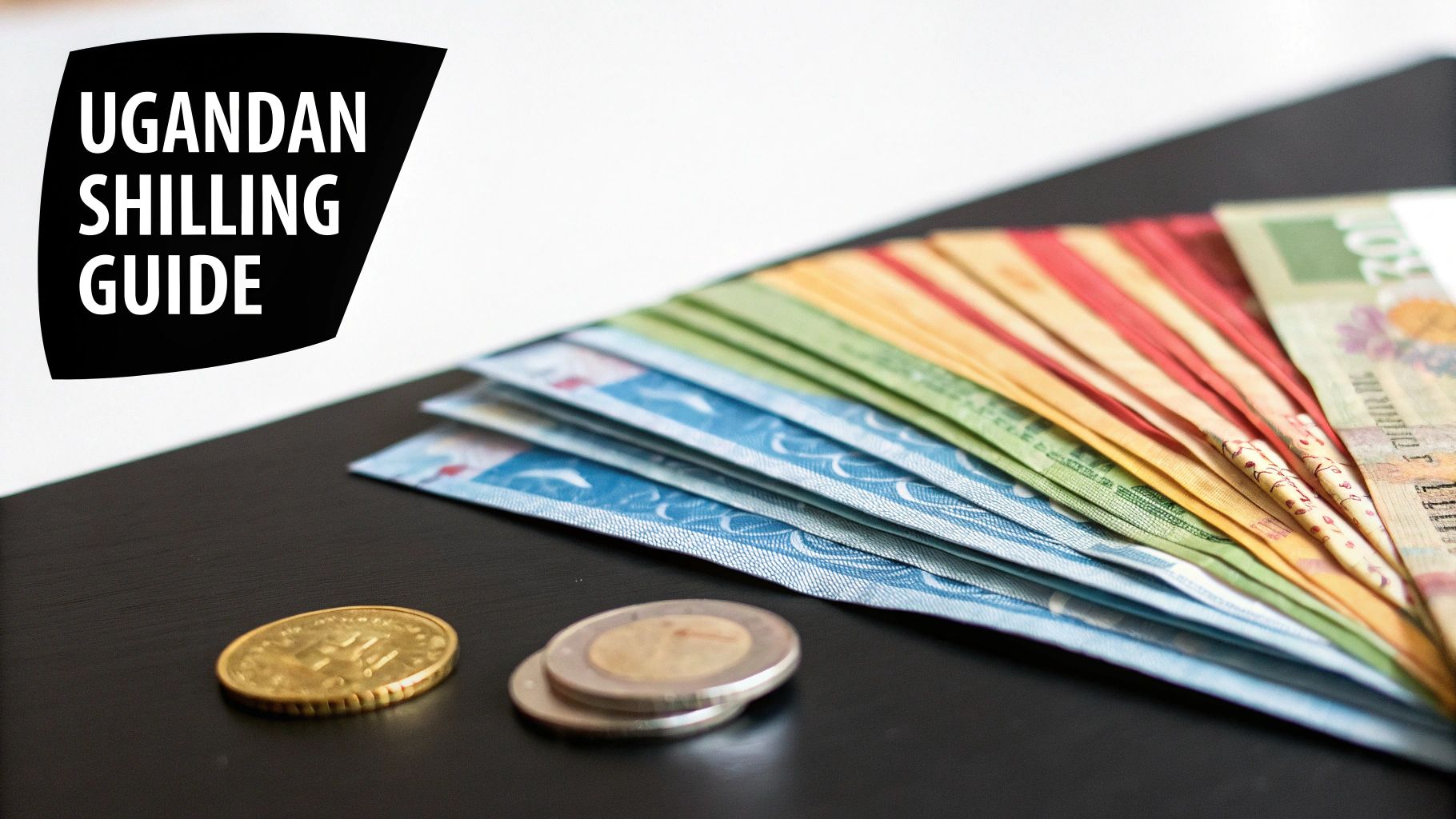
To navigate markets and pay for transport with ease, it's helpful to become familiar with the local currency: the Ugandan Shilling (UGX). Being able to distinguish between different banknotes and coins will make your transactions smoother.
Familiarity with the currency helps you understand local prices, determine fair costs for souvenirs, and budget your daily expenses. Small purchases might only require a coin, while a restaurant dinner will need larger banknotes. Each note and coin also offers a glimpse into Ugandan culture, featuring designs that celebrate the nation's natural heritage and history.
Getting to Know the Banknotes
Ugandan banknotes are colorful and easy to tell apart. The current series, introduced in 2010, showcases Uganda's wildlife, cultural symbols, and national landmarks.
Here are the main notes you will use:
- 50,000 UGX Note: The largest denomination, typically used for hotel bills or organized tours. A single 50,000 UGX note can often cover a nice dinner for two in Kampala.
- 20,000 UGX Note: A versatile note for daily spending, useful for a meal, a few boda-boda (motorcycle taxi) rides, or an entrance fee to a local attraction.
- 10,000 UGX Note: Perfect for smaller meals, market crafts, or mobile data top-ups.
- 5,000 UGX Note: Ideal for street food like the famous rolex, a bottle of water, or a short taxi ride.
- 2,000 & 1,000 UGX Notes: Keep a supply of these smaller notes for tips, snacks, and small purchases where exact change is helpful.
A useful tip from experienced travelers: break larger 50,000 UGX notes at supermarkets or your hotel when possible. Many smaller vendors, especially outside of major cities, may struggle to provide change. Carrying a mix of smaller denominations is always a good idea.
Coins in Circulation
While banknotes will cover most of your expenses, you will also use coins for smaller items. Although tourists may not use them as frequently, it is good to recognize them.
The coins in circulation are:
- 1,000 UGX
- 500 UGX
- 200 UGX
- 100 UGX
- 50 UGX
The 1,000 UGX coin is handy for parking fees or buying a drink from a roadside stall. The smaller coins are useful for making exact change at supermarkets or leaving a small tip.
How to Exchange Currency Safely
Getting a fair exchange rate can make your travel budget stretch further. When you arrive in Uganda, you will need to exchange your home currency (USD, EUR, GBP) for Ugandan Shillings (UGX). Knowing where to do this safely and affordably will save you both money and hassle.
You have three main options: airport kiosks, city forex bureaus, and local banks. Each offers different levels of convenience, rates, and security. Choosing the right one ensures you get more UGX for your money, leaving you with more to spend on your trip.
Comparing Your Exchange Options
Currency exchange counters at Entebbe International Airport are convenient but typically offer less favorable rates than you will find in Kampala. It is advisable to exchange only a small amount at the airport—enough for a taxi and a meal—and then exchange the rest in the city for a better rate.
For the best exchange rates, visit a licensed forex bureau in a major city like Kampala. These businesses are specialized, and competition helps keep their rates competitive. Banks are another secure option, though their rates may be slightly lower than forex bureaus, and you might face longer queues.
Here is a simple breakdown of your options:
- Airport Kiosks: Best for immediate cash needs. Exchange a small amount, such as $50, to cover initial expenses.
- Licensed Forex Bureaus: Your best option for the most favorable rates. Choose well-known, reputable bureaus in the city.
- Banks: A very safe and reliable choice, but expect slightly less competitive rates and potential wait times.
Smart Practices for Safe Exchange
Safety should be your top priority when exchanging money. Always use official, licensed businesses and avoid exchanging money with individuals on the street. These informal exchangers are known for scams, such as providing counterfeit notes or disappearing with your money.
Before making a transaction, quickly check the current mid-market exchange rate online. While you won't get this exact rate, it provides a benchmark for what a fair offer should be. A reputable bureau's rate should be reasonably close to it.
The value of the Ugandan shilling fluctuates. For instance, the exchange rate against the US dollar has shifted from around 3,240 UGX in 2015 to over 3,700 UGX in 2018. More recently, it has been in the 3,500-3,700 range, influenced by factors like Uganda's 3.40% inflation rate. You can find historical exchange rate data on the St. Louis Fed website.
Here is a quick checklist for identifying a legitimate service:
- They display exchange rates on a professional board.
- They operate from a formal office or counter.
- They provide an official receipt for the transaction.
Finally, always count your shillings at the counter before you leave. This simple check ensures you have received the correct amount and can proceed with confidence.
Using ATMs and Cards in Uganda
While cash is essential for most daily spending in Uganda, you don't need to carry large amounts with you. Knowing how and when to use your bank cards is a key part of smart travel. Card acceptance is mainly limited to urban areas and tourist-focused businesses, while ATMs are your primary source for withdrawing Ugandan Shillings (UGX).
In cities like Kampala and Entebbe, you can use credit or debit cards at major supermarkets, upscale restaurants, and high-end hotels. Most of these establishments accept Visa, and many also accept Mastercard. However, once you travel to smaller towns, local markets, or rural lodges, cash is the only accepted form of payment. For example, your card will work at one of the best hotels in Entebbe, but you will need cash to pay your boda-boda driver.
Finding Reliable ATMs
ATMs are widely available in Kampala and other large towns. To ensure a successful transaction with an international card, it's best to use ATMs operated by major international and regional banks.
Your safest options include:
- Stanbic Bank: Part of the Standard Bank Group, with a large network and high reliability for foreign cards.
- Absa Bank: Another major bank with a strong presence and good compatibility with international cards.
- Standard Chartered: A global bank known for handling foreign transactions smoothly.
Before you travel, inform your bank of your travel dates and destination to prevent them from blocking your card due to suspected fraudulent activity. Be aware that most Ugandan ATMs have a withdrawal limit, often around 2,000,000 UGX per transaction, and your home bank may also have its own daily limit.
When to Use Cash vs Card in Uganda
Knowing when to use cash or a card will simplify your transactions. A good rule is to use your card for large, secure payments where possible and withdraw cash from ATMs for everything else.
Pro Tip: When an ATM or card machine offers you a choice, always select to be charged in the local currency (UGX). Choosing your home currency triggers 'Dynamic Currency Conversion,' which typically results in a poor exchange rate and extra fees.
Here’s a quick guide to help you decide how to pay.
When to Use Cash vs Card in Uganda
| Situation or Location | Recommended Payment Method | Important Note |
|---|---|---|
| Large Supermarkets | Card | Widely accepted at chains like Shoprite or Carrefour. |
| Local Markets & Street Stalls | Cash Only | Vendors do not have card machines. Small notes are essential. |
| High-End Hotels & Lodges | Card or USD Cash | Major hotels accept cards, but some safari lodges prefer US Dollars. |
| Boda-Bodas & Taxis | Cash Only | Always have small shilling notes for local transport. |
| Restaurants in Cities | Card (Mid-to-High Range) | Upscale restaurants usually accept cards, but it's best to ask first. |
| Rural Shops & Guesthouses | Cash Only | Card infrastructure is virtually nonexistent outside of major urban areas. |
By balancing card use with a ready supply of cash, you’ll be prepared for any payment situation in Uganda.
Budgeting for Your Ugandan Adventure
Smart financial planning is the key to a stress-free trip. Creating a realistic budget before you go is the best way to manage your African money and enjoy your holiday to the fullest.
Your total spending in Uganda will depend on your travel style, but breaking down potential costs beforehand helps avoid surprises and ensures your Ugandan shillings last as long as you need them.
Daily Cost Breakdowns by Travel Style
To help you plan, here are some daily budget estimates. Remember that these are averages, and costs can vary between cities like Kampala and more rural areas.
- Backpacker Budget: On a tight budget, you can manage on $30-$50 per day. This covers a dorm bed, local food like rolex and matoke, and transport on boda-bodas or matatus (shared minibus taxis).
- Mid-Range Budget: For a more comfortable trip, plan for $100-$200 per day. This allows for private rooms in guesthouses, a mix of local and tourist-oriented restaurants, and hiring a private car for some journeys.
- Luxury Budget: For a high-end experience, expect to spend $400+ per day. This covers stays at luxury safari lodges, fine dining, private guided tours, and domestic flights.
A major expense to budget for separately is the gorilla trekking permit, which costs $800 per person for foreign non-residents as of 2024. This significant cost should be booked and paid for well in advance.
If you are planning this once-in-a-lifetime experience, our guide to a 3-days gorilla trekking Uganda trip can help you organize your itinerary and budget.
Tipping and Bargaining Customs
Understanding local customs around money can improve your interactions. Tipping is not mandatory in Uganda but is always appreciated as a gesture of thanks for good service.
A tip of 5-10% in a restaurant is considered generous. For drivers or tour guides, a small tip at the end of their service is a kind way to show gratitude.
In local markets, bargaining is a normal and expected part of the shopping experience. A good approach is to start by offering about half of the initial asking price and then negotiate with a friendly attitude to reach a price that is fair for both you and the vendor.
This chart illustrates the popularity of different payment methods in Uganda, highlighting the importance of cash.
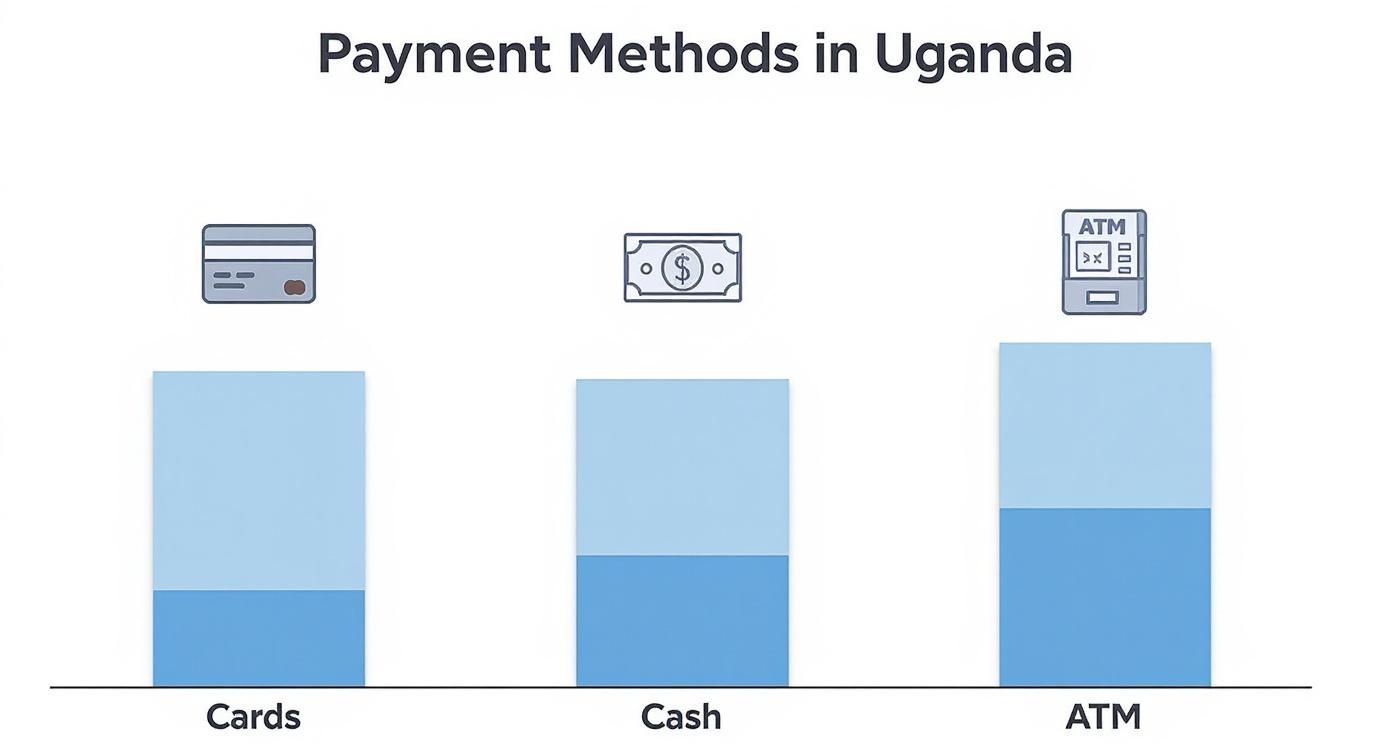
As the data shows, cash remains the dominant payment method, which is why having enough Ugandan shillings is crucial for most of your daily transactions.
The Ugandan Shilling in the East African Neighbourhood
If your travels include neighboring countries, it's useful to understand how the Ugandan Shilling (UGX) compares to other regional currencies. East Africa is a dynamic economic region, and some currency knowledge can be very helpful.
Each country in the region has its own currency and economic landscape. While the Ugandan Shilling is stable, you will encounter other major currencies like the Kenyan Shilling (KES) and the Tanzanian Shilling (TZS) if you travel overland. Understanding their relationships helps you make smarter decisions when exchanging money.
A Stable Player in the Region
From a traveler's perspective, Uganda's currency market offers a distinct advantage. The country's foreign exchange system is one of the most efficient in East Africa, which often translates to better exchange rates and lower fees for you.
The Ugandan shilling demonstrates notable stability and market efficiency compared to many other African currencies. Uganda's foreign exchange market operates with very low spreads, making it one of the best places in the region to exchange money.
This stability has made the shilling a reliable currency for trade with neighboring countries, providing a level of predictability not always found elsewhere. The UGX has shown resilience compared to more volatile African currencies.
Tips for the Multi-Country Traveller
If you are planning a multi-country East African tour, it is best to exchange currency in each country you visit. For example, trying to exchange Kenyan Shillings for Tanzanian Shillings while in Uganda will likely result in a poor rate.
Here are a few key rules to follow:
- Exchange on Arrival: Get local currency when you arrive in a new country for the best rates.
- The US Dollar Rules: The US Dollar is the most easily exchanged foreign currency throughout the region.
- Crossing by Land: You can usually exchange small amounts of cash at official border posts. Stick to official exchange bureaus and be cautious of street touts.
For more context on the region's diversity, see our guide to East Africa's nations. It provides insights into everything from the different types of African money to the rich cultures they represent.
Frequently Asked Questions About Ugandan Money
Here are quick answers to some of the most common questions travelers have about handling money in Uganda.
Can Tourists Use Mobile Money Services?
While technically possible, it is generally not practical for short-term visitors. Mobile money services like MTN Mobile Money and Airtel Money are extremely popular among locals for daily payments. However, setting up an account requires a local SIM card and a registration process that can be complicated for tourists. Most travelers find it easier to rely on cash and bank cards.
Is It Safe to Carry Large Amounts of Cash?
It is not recommended. Although Uganda is generally safe, carrying large amounts of cash can make you a target for theft.
A better strategy is to withdraw cash from an ATM every few days to cover your needs. This minimizes your risk and prevents you from having a large amount of leftover shillings at the end of your trip. Store your cash securely in a money belt or a hotel safe.
What Should I Do with Leftover Shillings?
You have a few options for any leftover Ugandan Shillings (UGX). The easiest is to spend them on last-minute souvenirs, snacks, or coffee at Entebbe International Airport. If you have a significant amount, you can exchange it back to your home currency at a forex bureau at the airport, but be aware that the exchange rate for selling shillings may not be very favorable. It's best to end your trip with as little local currency as possible.
Ready to plan your unforgettable Ugandan adventure? At HelloEastAfrica, we provide curated guides, seamless bookings for safaris and hotels, and all the resources you need to explore the best of the region.


Comment (0)