
A 3-day gorilla trekking trip in Uganda offers a compact yet profound wildlife experience, centered around a one-hour encounter with mountain gorillas in Bwindi Impenetrable National Park. This itinerary is designed for those with limited time, dedicating the first and third days to travel from Entebbe or Kampala (an 8-10 hour drive each way) and the second day entirely to the gorilla trek itself. The core of the trip involves securing a permit, trekking through dense rainforest, and spending a magical hour observing a habituated gorilla family in its natural habitat.
Understanding Your 3-Day Gorilla Trekking Plan
Successful gorilla trekking hinges on smart logistics. The drive from Entebbe International Airport to Bwindi Impenetrable National Park typically takes 8 to 10 hours by road, so days one and three are mainly travel.
On day two, you’ll rise before dawn for a ranger briefing and then plunge into the forest. Treks can last anywhere from 30 minutes to several hours, but the payoff is an hour spent face-to-face with a habituated gorilla family.
At a Glance: Your 3-Day Gorilla Trekking Plan
Below is a quick summary of each day’s highlights and travel details.
| Day | Main Activity | Approximate Travel Time | Key Focus |
|---|---|---|---|
| Day 1 | Travel & Acclimatisation | 8–10 hours | Scenic drive, Equator photo stop |
| Day 2 | Gorilla Encounter | Varies* | One-hour with gorilla family |
| Day 3 | Return Journey | 8–10 hours | Reflecting on the experience |
*Walking time depends on gorilla family location within the park.
This snapshot helps you visualise how each day unfolds and what to expect on the road versus in the rainforest.
The Core Itinerary Breakdown
- Day 1: Travel and Acclimatisation: Your guide picks you up in Entebbe or Kampala. Enjoy rolling green landscapes, pause at the Equator for photos, then settle into your lodge by evening.
- Day 2: The Gorilla Encounter: An early breakfast gets you to the park headquarters for a safety briefing. You’ll trek through moss-covered trees and vines until you meet your assigned gorilla family. After the magical hour, return to your lodge with memories that last a lifetime.
- Day 3: The Return Journey: Head back along the same scenic route, arriving in Entebbe or Kampala by evening. It’s a long drive, but the stories and photos you’ll share make every kilometre worthwhile.
Why This Structure Works
Focusing three days on a single goal—gorilla trekking—maximises your chances with limited time. While extended safaris in East Africa offer broad wildlife viewing, this itinerary zeroes in on mountain gorillas.
“Spending three days focused on gorillas offers a high-impact experience for those short on time.”
Gorilla tourism in Uganda began in 1993 and has supported conservation ever since. Trekking spans four sectors—Buhoma, Ruhija, Rushaga, and Nkuringo—each with its own terrain and gorilla families. For more safari options beyond gorillas, explore our Safaris And Tours page.
Securing Your Gorilla Permit for Bwindi
Your gorilla permit is the single most crucial element of your 3 days gorilla trekking Uganda safari and must be booked months in advance. The Uganda Wildlife Authority (UWA) issues a limited number of permits daily to protect the gorillas and their environment. While you can book directly, most travellers find it easier to use a reputable local tour operator who can navigate the booking system.
For travel during the peak seasons (June to September and December to February), it is essential to book your permit at least six months ahead of time, as they sell out very quickly.
This visual guide gives you a quick overview of how the 3-day trip typically unfolds.
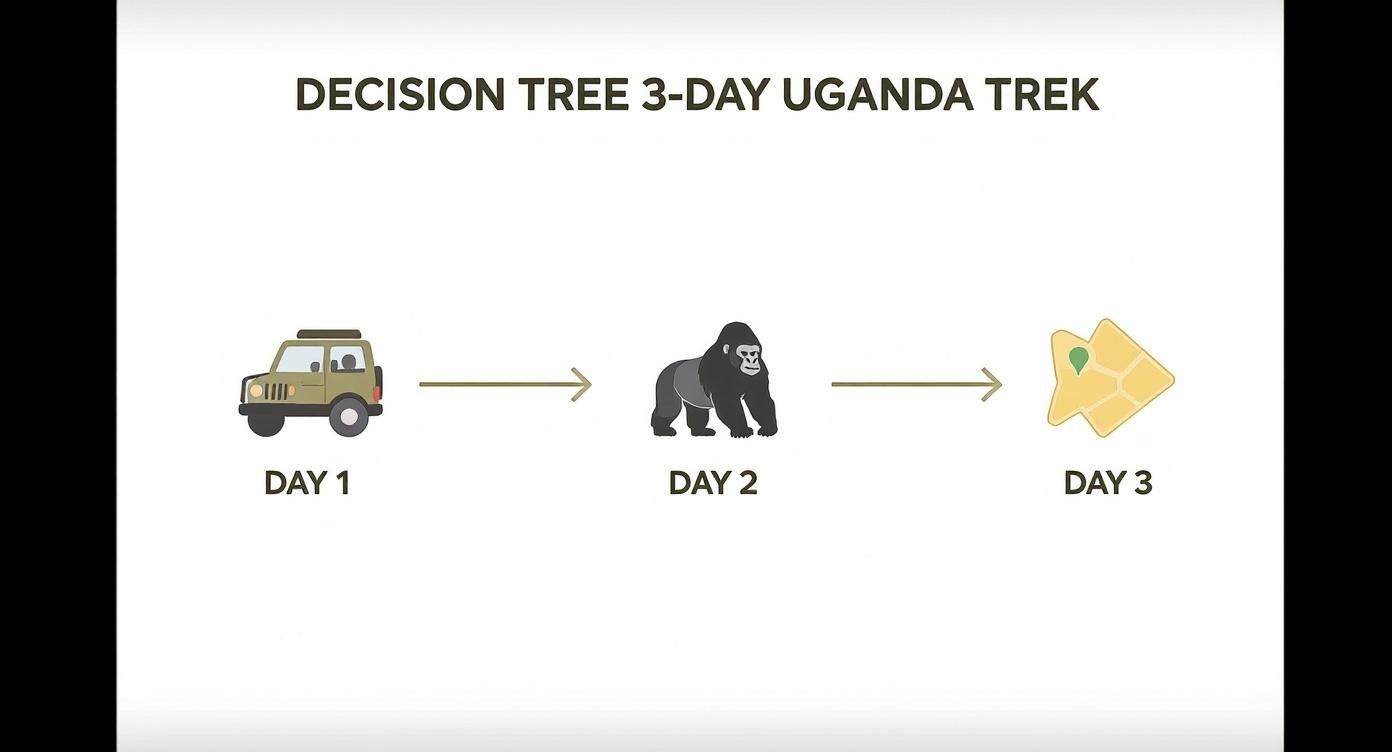
As you can see, the first and last days are mostly about travel, with the main event—the gorilla encounter—sandwiched right in the middle on day two.
Understanding Permit Costs and Categories
The price of a gorilla permit in Uganda is determined by your residency status. This fee is a direct investment in conservation efforts, funding ranger salaries, anti-poaching patrols, and community development projects around Bwindi Impenetrable National Park.
Here’s the current UWA price structure:
- Foreign Non-Residents: USD $800 per person
- Foreign Residents (with valid work permits): USD $700 per person
- East African Citizens: UGX 300,000 per person
This fee includes one trek and one hour with a habituated gorilla family. To minimise human impact, visitor numbers are strictly controlled. The park allows a maximum of eight visitors per gorilla group, ensuring a respectful and intimate experience for roughly 152 tourists daily across the entire park.
Your permit fee is a direct contribution to the survival of one of the world's most endangered primates. It's conservation tourism in its most impactful form.
Choosing the Right Bwindi Sector
Bwindi is a vast park divided into four distinct trekking regions, or sectors. The sector on your permit determines your trekking location and where you should book accommodation. Each area offers a different experience based on its terrain, accessibility, and resident gorilla families.
Buhoma Sector
Located in the north, Buhoma is the park's original trekking hub and is the most accessible sector. Its treks are often considered less strenuous, making it a popular choice.
Ruhija Sector
Situated in the east at a higher altitude, Ruhija is cooler and offers challenging treks with stunning views. It is also an excellent location for birdwatching.
Rushaga Sector
In the south, Rushaga has the highest concentration of habituated gorilla families, often resulting in better permit availability. The terrain is characterized by steep hills, offering a physically demanding but rewarding experience.
Nkuringo Sector
Also in the south, Nkuringo is known for its challenging treks and spectacular panoramic views of the Virunga volcanoes. This sector is best suited for trekkers with a high level of fitness.
When booking, you can request a sector that aligns with your fitness level and interests. A knowledgeable tour operator can provide valuable advice and ensure your lodge is conveniently located. For more answers to common questions, have a look at our detailed FAQs section.
What to Expect on Your Gorilla Trekking Day
The morning of your trek is filled with a mixture of anticipation and excitement. After an early breakfast, you will drive to the park headquarters, where the day's adventure begins.
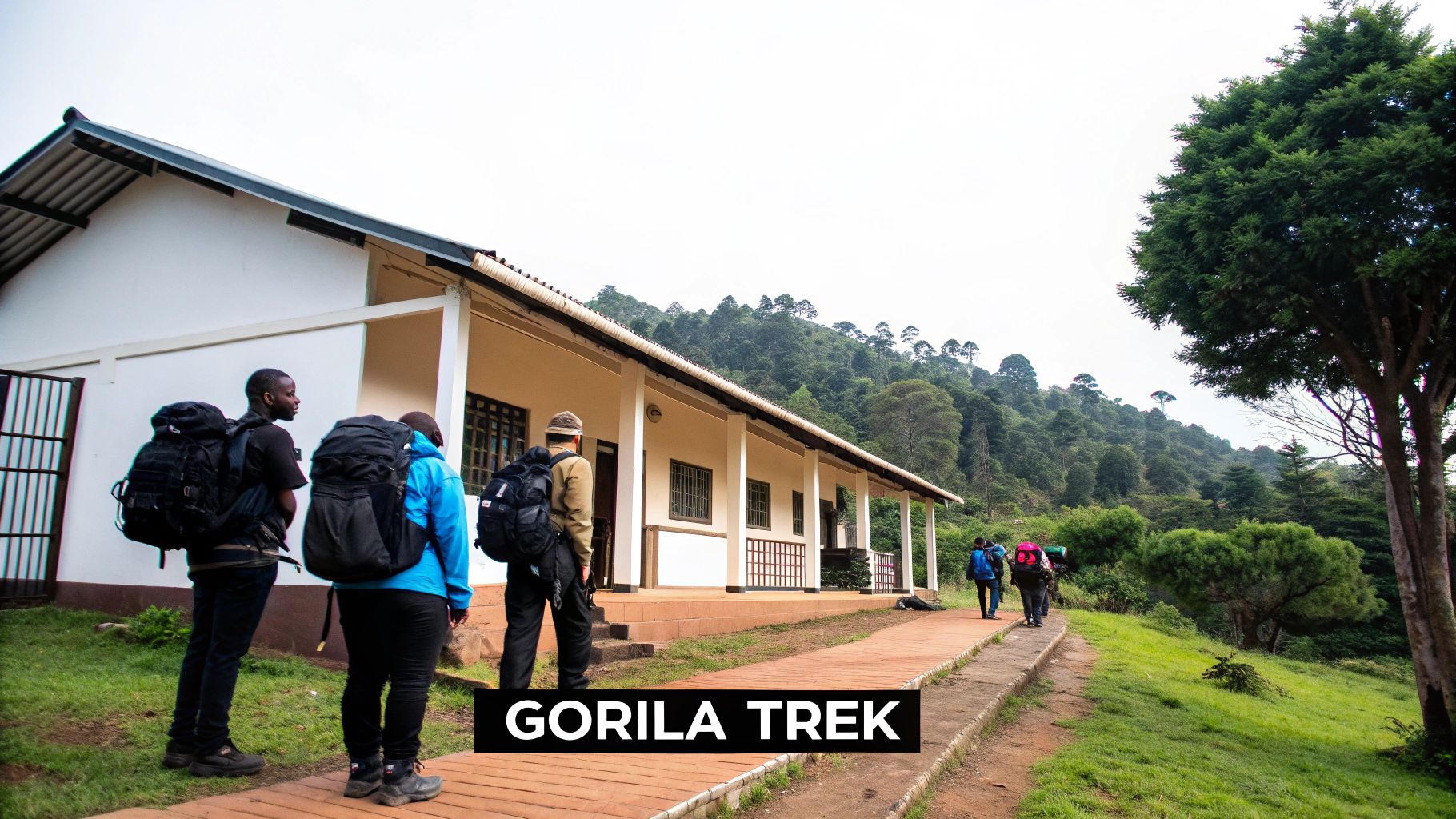
Here, you will meet fellow trekkers, guides, and park rangers, all sharing a common goal: a safe, respectful, and unforgettable encounter with Bwindi's gentle giants.
The Morning Briefing and Group Assignment
Before entering the forest, all visitors must attend a mandatory briefing. This session is vital for your safety and the gorillas' well-being. The head ranger will outline the essential rules of conduct.
Key rules include:
- Keep your distance: A minimum distance of 10 metres (about 32 feet) must be maintained from the gorillas to protect them from human diseases.
- No flash photography: Sudden flashes can frighten the gorillas, so ensure your camera's flash is disabled.
- Quiet on the trail: Voices should be kept to a whisper to avoid disturbing the wildlife.
- No food or drink: Eating or drinking near the gorillas is strictly prohibited.
Following the briefing, you will be assigned to a group of no more than eight people and a specific habituated gorilla family. Assignments are often made based on the perceived fitness of the trekkers, as some gorilla families are found closer to the trailhead than others.
The Trek Through Bwindi's Impenetrable Forest
Led by armed ranger guides, you will enter the ancient, misty rainforest. The term "Impenetrable" accurately describes the terrain, which consists of steep, muddy slopes, dense vegetation, and tangled vines. The trek can last anywhere from 30 minutes to seven hours or more, depending on the location of the gorillas that day.
Hiring a local porter for a fee of around $20 USD is highly recommended. A porter will carry your daypack, assist you on difficult sections of the trail, and provide direct economic support to the local community.
The hike isn't just a means to an end; it is part of the adventure. Embrace the challenge, soak in the sounds of the forest, and just marvel at the incredible biodiversity all around you.
Advanced trackers head out at dawn to locate the gorilla families, using clues like bent branches and knuckle prints. They then radio the location to your guide, leading your group directly to the gorillas.
Your Magical Hour with the Gorillas
When you reach the gorilla family, your guide will signal for silence. You will leave your bags and walking sticks behind and move forward for your one-hour observation. Seeing a family of mountain gorillas up close is an awe-inspiring experience.
You may observe a large silverback watching over his family, juveniles playing in the foliage, or a mother grooming her infant. Their expressions and social interactions are remarkably human-like.
During this hour, be present and:
- Observe the silverback: As the leader, his calm presence dictates the group's mood.
- Watch the youngsters: Their playful antics provide excellent photo opportunities.
- Listen to their sounds: You will likely hear soft grunts and rumbles, which are forms of communication.
The hour passes quickly, but the memory of this humbling and profound connection to wildlife will last a lifetime.
How to Budget for Your 3-Day Gorilla Safari
A realistic budget for a 3-day gorilla trek in Uganda must account for the permit, transportation, accommodation, and smaller incidental costs. Planning your finances in advance ensures a stress-free and enjoyable experience.
The main expenses are the gorilla permit, a 4×4 vehicle with a driver, and two nights' accommodation. However, you should also factor in costs for meals during travel, hiring a porter, and tipping guides and lodge staff.
Breaking Down the Major Costs
The total cost of your trip is influenced by three primary factors: the gorilla permit, transport, and accommodation.
The gorilla permit is the largest single expense, currently costing $800 USD for foreign non-residents. This price is fixed by the Uganda Wildlife Authority.
For transport, a reliable 4×4 vehicle with an experienced driver-guide is essential for the 8-10 hour journey to Bwindi. This typically costs between $150 and $250 USD per day, which includes the vehicle, fuel, and the guide's expenses.
Your choice of accommodation significantly impacts the budget. Bwindi offers a range of options:
- Budget Lodges: Simple guesthouses or tented camps costing $50 to $100 USD per night.
- Mid-Range Lodges: Comfortable private cottages with better amenities, priced from $150 to $300 USD per night.
- Luxury Lodges: Top-tier lodges with premium service and amenities, costing $400 to over $900 USD per night.
You can browse a great selection of places to stay on our curated list of hotels near Bwindi to find something that fits your style and wallet.
Factoring in Smaller But Essential Expenses
Several smaller costs are crucial for a smooth trip. Hiring a porter for about $20 USD is recommended for both convenience and community support. Budget an additional $30 to $50 USD for meals during the drives on days one and three.
Tipping is a deeply appreciated custom here. It’s a way to show gratitude for great service and plays a vital role in the local tourism economy. Your guides, rangers, porters, and lodge staff will be incredibly grateful.
Here’s a simple guide for tipping:
- Driver-Guide: $15–$20 per day, from the group.
- Trekking Ranger/Guide: $10–$15 per person.
- Porter: $5–$10 per person.
- Lodge Staff: It’s common to leave $10–$15 in a communal tip box when you check out.
Sample Budget Scenarios
To help with your planning, the table below provides an estimated cost breakdown for a solo traveller, illustrating how different travel styles affect the total price.
Estimated Cost Breakdown for a 3-Day Trek
| Expense Item | Budget Estimate (USD) | Mid-Range Estimate (USD) | Luxury Estimate (USD) |
|---|---|---|---|
| Gorilla Permit | $800 | $800 | $800 |
| Transport (3 days) | $450 | $600 | $750 |
| Accommodation (2 nights) | $120 | $400 | $1,200 |
| Meals (en route) | $30 | $40 | $50 |
| Porter & Tips | $50 | $60 | $80 |
| Total Estimated Cost | $1,450 | $1,900 | $2,880 |
These estimates provide a solid starting point for planning your 3 days gorilla trekking Uganda safari and creating a trip that aligns with your budget.
What to Pack for Your Gorilla Trek
Packing correctly for a 3-day gorilla safari in Uganda is crucial for a comfortable and successful experience. Your gear should be durable, lightweight, and waterproof to protect you from the elements in the Bwindi Impenetrable Forest.
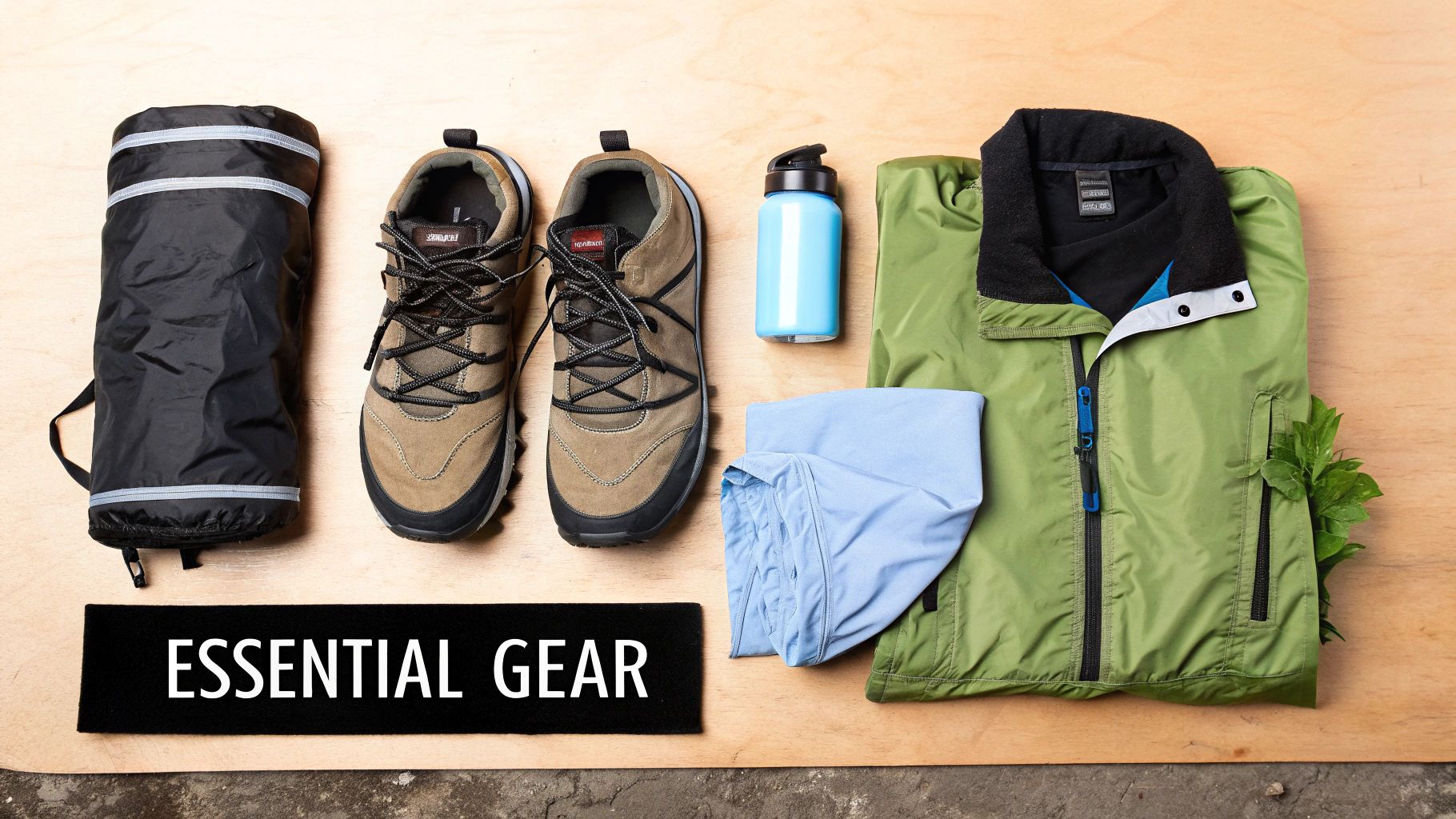
The focus is on functional gear that keeps you dry, stable, and protected, allowing you to fully immerse yourself in the gorilla encounter.
Clothing and Footwear: Your First Line of Defence
A sturdy, waterproof pair of hiking boots with good ankle support and grip is the most important item on your packing list. Ensure they are well broken-in before your trip to prevent blisters.
Essential clothing includes:
- Long Trousers & Long-Sleeved Shirts: Wear neutral-colored clothing (khaki, green, brown) to protect against stinging nettles, branches, and insects. Avoid bright colors, black (which attracts tsetse flies), and camouflage patterns.
- A Quality Rain Jacket: Bwindi's weather is unpredictable. A lightweight, breathable rain jacket or poncho is essential.
- Gaiters: These waterproof coverings go over your boots and trousers to keep out mud, water, and insects.
- Gardening Gloves: Sturdy gloves are useful for gripping vegetation on steep or slippery sections of the trail and protecting your hands from thorns.
The Daypack: Your Trekking Lifeline
Carry a small, lightweight daypack containing your essentials for the trek. Hiring a porter to carry it is a great option.
Your daypack should include:
- Water: At least two litres in a reusable bottle.
- Energy-Boosting Snacks: Pack items like granola bars or nuts to maintain energy levels.
- Insect Repellent: Use a repellent containing DEET.
- Sun Protection: A wide-brimmed hat, sunglasses, and sunscreen are necessary.
- Basic First-Aid Kit: Include personal medications, plasters, antiseptic wipes, and painkillers.
“Packing the right gear isn't about having the most expensive equipment; it's about having the correct equipment. A good pair of boots and a reliable rain jacket can make the difference between a miserable hike and an incredible adventure.”
Don't Forget Your Tech and Documents
A portable power bank is highly recommended, as electricity can be unreliable at remote lodges. Bring extra memory cards for your camera, as you will likely take many photos.
By participating in this trek, your tourism funds contribute directly to conservation efforts that have helped the mountain gorilla population grow. A 2018 census recorded 459 gorillas in the Bwindi-Sarambwe ecosystem, part of a global wild population now exceeding 1,000. This demonstrates why Uganda is a top gorilla safari destination and highlights the positive impact of responsible travel.
Your Gorilla Trekking Questions Answered
Even with careful planning, questions often arise before a trip. Here are answers to some of the most common queries about a 3-day gorilla trek in Uganda.
How Fit Do I Really Need to Be?
The difficulty of the trek varies daily, as it depends entirely on the location of your assigned gorilla family. A trek can be a relatively easy 30-minute walk or a strenuous seven-hour hike over steep, muddy terrain. Bwindi's altitude, ranging from 1,160 to 2,607 metres (3,806 to 8,553 feet), can also affect your breathing.
Park rangers try to match trekking groups to gorilla families based on the perceived fitness of the visitors.
You don't need to be an elite athlete, but a decent level of fitness is a must. If you can comfortably walk for a few hours on uneven ground, you'll be fine. Getting in some regular walks or hikes in the weeks before your trip is the best way to prepare.
When is the Best Time of Year to Go?
Gorilla trekking is possible year-round, but the experience differs between the dry and rainy seasons.
The two dry seasons are the most popular times to visit:
- June to September (long dry season)
- December to February (short dry season)
During these periods, the forest trails are drier and easier to navigate. However, this is peak season, so permits and accommodation should be booked far in advance.
The rainy seasons offer a different experience:
- March to May (long rains)
- October to November (short rains)
While trails are muddier, the forest is lush and green, and there are fewer tourists. Gorillas may also be found on the lower slopes, potentially shortening the trek. Permits and lodges are generally easier to secure during these months.
Are There Age Restrictions?
Yes, the Uganda Wildlife Authority (UWA) has a strict minimum age limit of 15 years for all gorilla trekkers. Passports are checked at the pre-trek briefing to verify age.
This rule is in place for several reasons:
- Safety: It ensures that participants are physically and mentally mature enough to handle the challenging terrain and follow safety instructions.
- Disease: Gorillas are highly susceptible to human illnesses. The age limit helps reduce the risk of transmitting diseases from children to the gorillas.
- Unpredictable Behaviour: The presence of gorillas requires calm and quiet. A child's sudden movements or noises could startle or provoke a gorilla.
This age restriction is a key part of Uganda's responsible tourism policy, designed to protect both visitors and the gorilla population.
Ready to turn this plan into reality? At HelloEastAfrica, we specialise in connecting travellers with Uganda's best local operators and lodges. We'll handle the details so you can focus on the unforgettable experience of meeting the mountain gorillas. Start planning your adventure with us today!
What will your Uganda trip cost?
Use the Uganda Trip Cost Calculator to see a realistic starting range before you ask for a human-checked quote.


Comment (0)