

Uganda is a landlocked East African country known as the "Pearl of Africa" for its stunning landscapes, incredible biodiversity, and welcoming culture. Visitors come to track mountain gorillas in misty rainforests, see tree-climbing lions on the savanna, and experience the powerful source of the Nile River. It offers a unique mix of wildlife encounters and cultural experiences, making it an unforgettable adventure destination.
This guide provides everything you need to know for your trip, from the best destinations and ideal travel times to practical tips on visas, safety, and local customs.
Why Visit Uganda, The Pearl of Africa?
Uganda offers a unique travel experience where raw adventure meets unspoiled natural beauty and warm, genuine hospitality. Unlike more crowded safari destinations, Uganda provides a more personal and intimate encounter with African wildlife and landscapes. Winston Churchill famously called it the "Pearl of Africa" because it packs the continent's diversity—from snow-capped mountains and vast savannas to dense jungles and the world's largest tropical lake—into one compact country.
This remarkable geographical variety sets the stage for a wide range of adventures and an incredible array of wildlife.
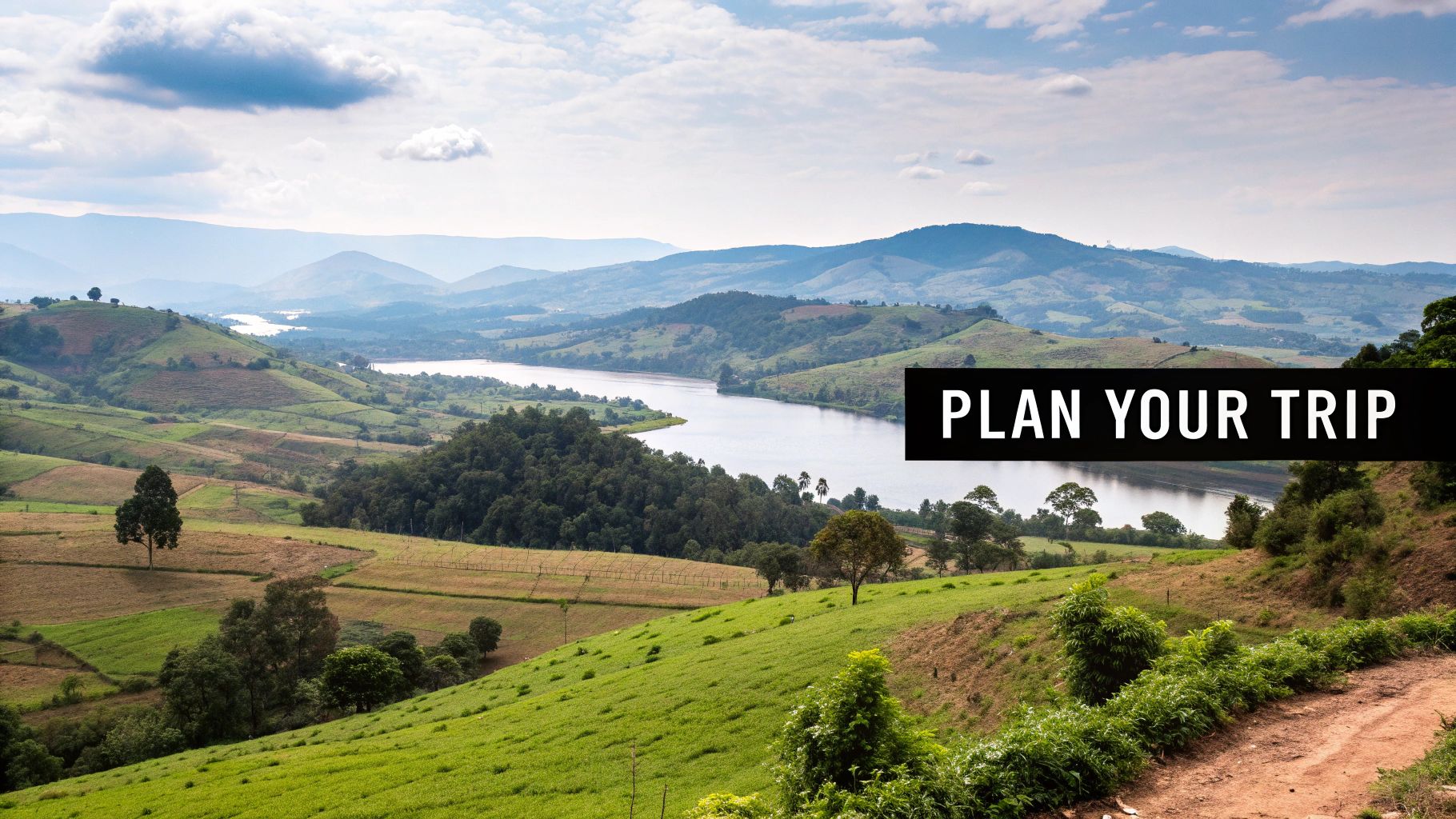
Unforgettable Wildlife Encounters
Uganda is a premier destination for primate encounters. It is home to over half of the world's remaining mountain gorillas, found in Bwindi Impenetrable National Park and Mgahinga Gorilla National Park. Additionally, Kibale Forest National Park boasts the highest concentration of primates in Africa, making it the top spot for chimpanzee tracking. Classic safari experiences are also exceptional, with opportunities to see tree-climbing lions in Queen Elizabeth National Park and large herds of elephants and giraffes in Murchison Falls National Park.
Key wildlife highlights include:
- Mountain Gorilla Trekking: A rare opportunity to spend an hour with a gorilla family in their natural habitat.
- Chimpanzee Tracking: Observe our closest relatives in the wild jungles of Kibale Forest.
- Classic Game Drives: Search for lions, leopards, elephants, buffalo, and more across sprawling savannas.
- Boat Safaris: Cruise the Kazinga Channel or the Nile River to see hippos, crocodiles, and abundant birdlife.
A Tapestry of Landscapes and Cultures
Uganda's scenery is as diverse as its wildlife. The country features Lake Victoria, the source of the Nile River, which begins its journey in Jinja—now an adventure sports hub. In the west, the Rwenzori Mountains, or "Mountains of the Moon," offer challenging treks to glacial peaks.
The culture is a vibrant mix of over 50 ethnic groups, each with unique languages and traditions. English and Swahili are the official languages, but Luganda is widely spoken, especially in the capital, Kampala. This diversity offers rich cultural experiences, from exploring bustling city markets to visiting rural villages.
A trip to Uganda is more than just a holiday; it's an immersion into a world of vibrant life, from the smallest forest creature to the bustling city streets. It’s a place that stays with you long after you’ve returned home.
Uganda Quick Trip Planner
This table provides a snapshot of key information to help you plan your trip to Uganda.
| Category | Details |
|---|---|
| Top Attractions | Bwindi Impenetrable National Park, Murchison Falls, Queen Elizabeth National Park |
| Best Travel Times | Dry seasons: June to August and December to February |
| Visa Requirement | Most nationalities require an eVisa, which costs approximately $50 USD |
| Official Language | English and Swahili |
| Currency | Ugandan Shilling (UGX) |
| Key Activity | Gorilla Trekking |
Exploring Uganda's Must-See Destinations
Uganda offers a diverse range of attractions, from world-famous national parks protecting rare wildlife to vibrant cities and serene lakes. The country is best known for its primate sanctuaries like Bwindi Impenetrable National Park, but its savanna parks, such as Queen Elizabeth and Murchison Falls, provide classic safari experiences. Beyond the parks, destinations like Jinja at the source of the Nile and the beautiful Lake Bunyonyi offer unique adventures and relaxation.
This section covers Uganda's top destinations to help you build your ideal itinerary.
Bwindi Impenetrable National Park: The Gorilla Sanctuary
Bwindi Impenetrable National Park is a UNESCO World Heritage Site and the primary destination for wildlife tourism in Uganda. This ancient rainforest is home to nearly half of the world's mountain gorilla population. A trek to see these magnificent creatures is a profound and unforgettable experience.
The hike can be challenging, involving steep, muddy trails through dense jungle, but the reward is spending an hour observing a gorilla family in their natural environment.
- Key Activity: Mountain Gorilla Trekking. Permits are limited and must be booked months in advance.
- Wildlife to Spot: Besides gorillas, the park is home to chimpanzees, L'Hoest's monkeys, and over 350 bird species.
- Insider Tip: Hire a porter. The fee supports the local community, and their assistance on the trail is invaluable.
Queen Elizabeth National Park: A Medley of Ecosystems
Queen Elizabeth National Park is celebrated for its stunningly diverse landscapes, including savannas, forests, lakes, and wetlands. This variety supports an incredible density of wildlife. The park is famous for its tree-climbing lions, found in the southern Ishasha sector. A highlight is the boat cruise along the Kazinga Channel, which has one of the highest concentrations of hippos in Africa and attracts elephants, crocodiles, and numerous birds.
Murchison Falls National Park: The Power of the Nile
Murchison Falls National Park showcases the raw power of the Nile River. The park's centerpiece is the spectacular Murchison Falls, where the river funnels through a narrow 7-metre gorge and plunges 43 metres with immense force. A boat safari to the base of the falls offers close-up views of hippos, crocodiles, and diverse birdlife. For a different perspective, hiking to the top of the falls allows you to feel the ground tremble from the power of the water.
Uganda's natural wonders are deeply connected to its people and history. The country's population journey reflects significant changes, from just over two million people in 1800 to an estimated 45.7 million by 2020, a story of resilience and growth. Discover more insights about Uganda's historical population trends and the factors that shaped them.
Kibale Forest National Park: The Primate Capital
Kibale Forest is known as the "Primate Capital of the World" and is the best place in East Africa for chimpanzee tracking. The park is home to 13 primate species. Guided treks take you into the forest to find habituated chimpanzee troops, offering an active and engaging wildlife experience. The forest is also a haven for birdwatchers, with over 375 species recorded.
Beyond the National Parks
While safaris are a major draw, other destinations showcase different aspects of Uganda's charm.
Key Destinations to Consider
| Location | Main Attraction | Why You Should Visit |
|---|---|---|
| Jinja | Source of the Nile | Known as East Africa's adventure capital. Perfect for white-water rafting, kayaking, and bungee jumping. |
| Kampala | Vibrant City Life | Explore bustling markets like Owino, visit the Kasubi Tombs, and experience the city's lively nightlife. |
| Lake Bunyonyi | Serene Scenery | A stunningly beautiful lake dotted with 29 islands. Ideal for relaxing, canoeing, and bird watching. |
Each of these locations adds a unique layer to your Ugandan adventure. For more detailed trip planning, see our guide to the best places to visit in Kampala.
Choosing the Best Time to Visit Uganda
The best time to visit Uganda is during its two dry seasons: from June to August and from December to February. These periods offer the most pleasant weather for wildlife viewing and outdoor activities like gorilla trekking. However, the wet seasons also have their advantages, including fewer crowds and lush, green landscapes. Your ideal travel time depends on your priorities.
The Dry Seasons: Prime Time for Wildlife
During the dry seasons, the weather is sunny and comfortable. Vegetation is less dense, making animals easier to spot as they congregate around water sources. This is the optimal time for game drives and primate trekking, as forest trails are drier and more manageable.
- June to August: This is the peak tourist season with excellent weather and superb wildlife viewing conditions.
- December to February: Another popular period with great weather, although it can be slightly hotter.
This timeline provides a visual overview of Uganda's population growth, reflecting how its vibrant culture has developed over the years.
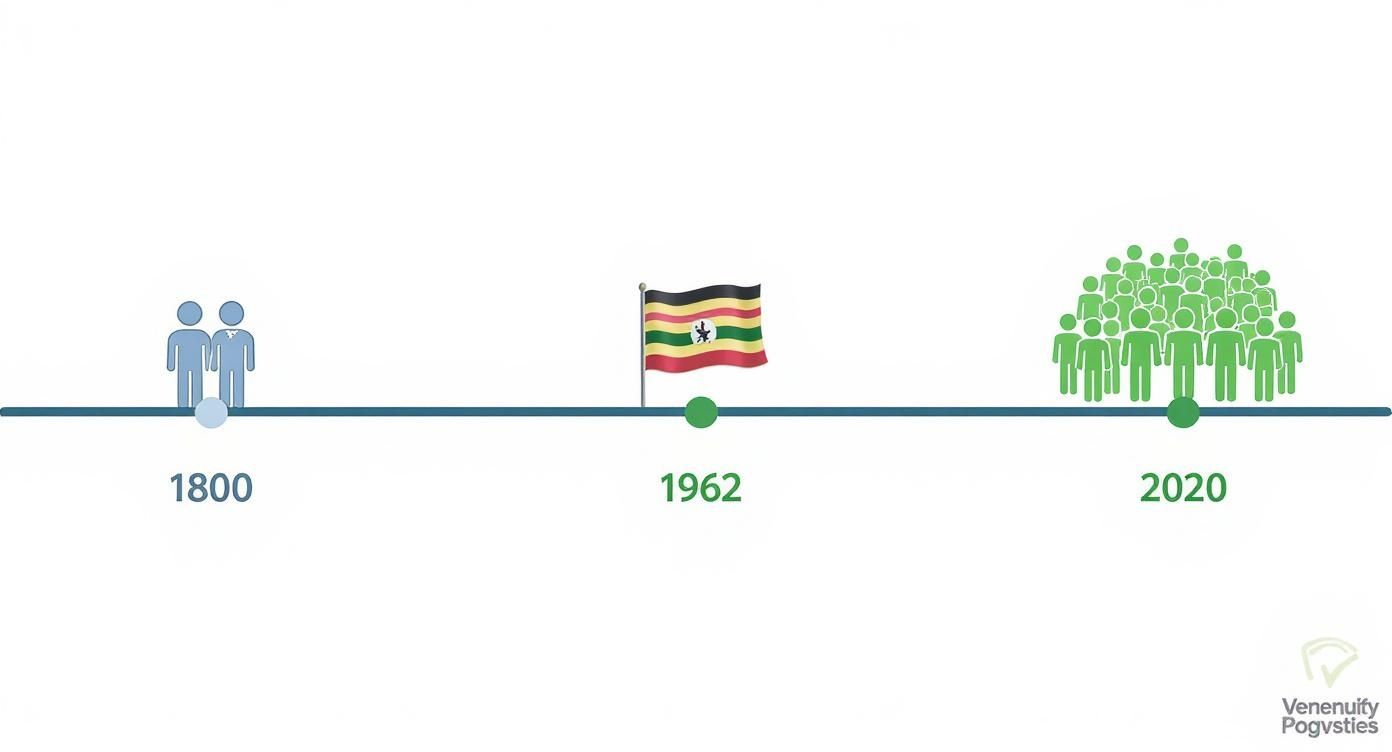
The infographic clearly shows the steady rise in population, which gained significant momentum after independence in 1962, shaping the nation you can visit today.
The Wet Seasons: A Different Kind of Beauty
The wet seasons run from March to May and from September to November. During these months, the landscape becomes incredibly green and vibrant, making it a paradise for photographers. Rains often come in short afternoon downpours. This is the low season, so you may find better deals on accommodation and tours.
The wet season is the absolute best time for birdwatching in Uganda. Migratory birds flock to the country, and resident birds show off their spectacular breeding plumage. It’s a true spectacle for any bird lover.
The main drawbacks are that rural roads can become challenging, and gorilla trekking is a much muddier experience. However, if you prefer lush scenery and fewer tourists, the wet season can be a rewarding time to visit. For more specific advice, you can learn more about planning a trip to see the gorillas in Uganda.
Connecting with Ugandan Culture and People
To truly experience Uganda, it's essential to connect with its people and diverse culture. The country is home to over 50 distinct ethnic groups, creating a rich tapestry of traditions, languages, and customs. Understanding local etiquette, such as the importance of greetings and community, will transform your trip into a more meaningful and immersive experience.
https://www.youtube.com/embed/3YOrz1eSbGk
This section guides you through Uganda's traditions and social norms to help you build genuine connections during your travels.
A Rich Mosaic of Ethnic Groups
Uganda's cultural landscape is divided into four main linguistic groups: Bantu, Nilotic, Nilo-Hamitic, and Sudanic. The Baganda are the largest ethnic group, located in the central region around Kampala. Their language, Luganda, is widely spoken in the capital, and their history is tied to the ancient Buganda Kingdom. In the northeast, the semi-nomadic Karamojong are known for their cattle-centric traditions. In the west, groups like the Banyankole and Bakiga contribute to the nation's diverse cultural identity.
Understanding Social and Religious Dynamics
Faith and community are central to Ugandan society. The population is predominantly Christian, with a significant Muslim minority, all coexisting peacefully. Family is the core social unit, and respect for elders is a fundamental value.
Uganda has one of the world's highest fertility rates, which has created an incredibly youthful population. A huge portion of Ugandans are under the age of 15, placing a significant dependency burden on the working-age population.
Essential Cultural Etiquette for Travellers
Observing local customs will enhance your interactions and show respect for the culture.
Greetings Are Key
- Take Your Time: Greetings are an important social ritual. Always start with a warm "hello" before asking a question. A simple Oli otya? (How are you?) in Luganda is a great start.
- Use Your Right Hand: Always use your right hand for handshakes, exchanging items, and eating, as the left hand is considered unclean.
- Show Respect to Elders: Greet elders first. A younger person might offer a slight bow or curtsy as a sign of respect.
Dress Code and Modesty
- Cover Up: Dress modestly, especially in rural areas and at religious sites. For women, this means covering shoulders and knees.
- Observe Locals: Kampala is relatively modern, but conservative dress is common in villages. Follow the local lead.
Asking for Permission
- Photography: Always ask for permission before taking someone’s photograph. Most people are happy to agree, but it is respectful to ask first.
- Visiting Homes: If invited into a home, it is a great honor. Bringing a small gift like sugar or fruit is a thoughtful gesture of appreciation.
Getting to Grips with the Practical Stuff
A trip to Uganda is a wonderful experience, and some practical preparation can ensure it goes smoothly. You will need to arrange your visa, understand the local currency, and plan your transportation. Sorting out these logistics in advance allows you to focus on enjoying the adventure once you arrive.
This section covers essential practical information, from money and visas to health, safety, and getting around the country.
Visas and Money Matters
Most visitors need a visa to enter Uganda. You can apply online for an eVisa through the official government portal before your trip. A standard single-entry tourist visa costs approximately $50 USD. It is best to complete this process well in advance to avoid any issues upon arrival at Entebbe International Airport.
The local currency is the Ugandan Shilling (UGX). While US dollars are accepted for major tourist expenses like gorilla permits and high-end lodges, you will need shillings for daily purchases like meals, market goods, and tips.
- Exchanging Currency: The best rates are found at forex bureaus or banks in Kampala and Entebbe. Bring crisp, clean US dollar bills printed after 2009, as older or damaged notes may be rejected.
- Using ATMs: ATMs are available in major towns but are rare in rural areas. It is wise to carry a combination of cash (both USD and UGX) and cards.
Health and Safety on the Road
Consult your doctor or a travel clinic 4-6 weeks before your trip for personalized health advice and necessary vaccinations. A Yellow Fever vaccination certificate is mandatory for entry into Uganda. The vaccine must be administered at least 10 days before departure. Other recommended vaccinations may include Hepatitis A, Typhoid, and Tetanus.
Malaria is a real risk across most of Uganda. Your doctor will almost certainly recommend anti-malarial tablets. You’ll need to be disciplined about taking them, and also use a good insect repellent and sleep under a mosquito net. Thankfully, nearly all lodges and hotels provide them.
Uganda is generally a safe and welcoming country. Use standard travel precautions: avoid displaying expensive items, be cautious in cities at night, and stay aware of your surroundings.
How to Get Around Uganda
Transportation options in Uganda vary depending on your budget and itinerary. The most common method for tourists is hiring a private driver with a 4×4 vehicle, which provides flexibility and the benefit of a local guide. Many of the best safari lodges in Uganda can assist with these arrangements. For those short on time, domestic flights connect major hubs near national parks.
In cities like Kampala, boda-bodas (motorcycle taxis) are a fast and popular way to get around. Always wear a helmet and agree on the fare before starting your journey.
Your Top Uganda Travel Questions, Answered
Planning a trip to Uganda involves several key questions about safety, health, currency, and logistics for major activities like gorilla trekking. Getting clear answers to these common queries will help you feel prepared and confident for your journey.
This FAQ section addresses the most important topics for travellers heading to the Pearl of Africa.
Is Uganda a Safe Country for Tourists?
Yes, Uganda is considered a safe country for tourists. Ugandans are known for their friendliness and hospitality, and the tourism infrastructure in major parks and cities is well-established. The warmth of the local people is often a highlight for visitors.
However, travellers should always exercise standard safety precautions. Be aware of your surroundings, avoid walking alone in unfamiliar areas at night, and keep valuables secure. It is also advisable to check your home country's travel advisories for the most current information before you depart.
What Vaccinations Do I Need for Uganda?
A Yellow Fever vaccination certificate is mandatory for entry into Uganda. You must receive the vaccine at least 10 days before you travel.
Other highly recommended vaccinations include:
- Hepatitis A and B
- Typhoid
- Tetanus (ensure your booster is up to date)
Anti-malarial medication is also strongly advised, as malaria is prevalent throughout the country. Consult your doctor or a travel clinic 4-6 weeks before your trip to get all necessary vaccinations and prescriptions.
What Is the Best Way to See Gorillas in Uganda?
The best way to see gorillas is on a guided trek in either Bwindi Impenetrable National Park or Mgahinga Gorilla National Park. This is a highly regulated conservation activity that allows visitors to spend one hour with a habituated gorilla family in their natural habitat.
To participate, you must obtain a gorilla trekking permit from the Uganda Wildlife Authority (UWA). Permits are limited and sell out months, or even a year, in advance, especially during peak season. Most travellers book their permits through a reputable tour operator.
A crucial tip: Book your permit the moment you decide on your travel dates, especially if you're travelling in the high season. This experience is what people travel across the world for.
The trek can be physically demanding, so being in good physical condition is recommended.
What Currency Should I Use in Uganda?
The official currency is the Ugandan Shilling (UGX), which you will need for everyday expenses like local meals, market shopping, and transport.
However, US Dollars are widely used for major tourism-related payments, including:
- Gorilla and chimpanzee trekking permits
- National park entry fees
- Bills at upscale hotels and safari lodges
- Payments to tour operators
Bring US dollar bills printed after 2009 that are in excellent condition, as old or damaged notes are often rejected. The best strategy is to carry a mix of both currencies and exchange money at a forex bureau or bank upon arrival.
At HelloEastAfrica, our passion is helping you craft the perfect adventure. We connect you with trusted local experts across Uganda and the entire region, making it simple to book the best lodges and arrange safaris you'll remember for a lifetime.
Head over to HelloEastAfrica to explore our guides, get practical tips, and start planning your dream trip with confidence.


Comment (0)